The powerful nutrients in flaxseeds can help fight many diseases, including cardiovascular diseases, inflammation, arthritis, allergies, asthma, and diabetes. Flaxseeds also help reduce the risk of various cancers and improve reproductive health in females. They also aid in maintaining healthy eyes, skin, and hair.
What is Flaxseed?
Flaxseeds are tiny, brown or golden-coloured seeds, which are also known as linseed. The health benefits of these seeds have made them a part of the traditional cuisines of Asia, America, and Africa. They can be eaten in their raw form, but are more beneficial when sprouted or grounded into a tasty meal. The body can absorb the nutrients from flaxseeds more easily when it is ground or sprouted. These seeds are used to make flaxseed oil, which is also very easy to digest.
Flaxseed Nutritional Facts
Flaxseeds are a great source of dietary fiber and plant-based protein. As per the USDA, flaxseeds contain zero cholesterol. They are rich in alpha-linolenic acid, omega-3 fatty acids, and lignans. Minerals present in these seeds include thiamine, manganese, and magnesium. They are also a rich source of vitamin C and B6, calcium, iron, potassium, and sodium. [1]
Health Benefits of Flaxseed
There are many health benefits of flaxseed that can improve your health and the quality of your diet. Let us look at some of them in detail: [2]
High Fiber Content
Flaxseed forms an essential part of many diet programmes since it keeps blood sugar levels in check. Due to the presence of fiber, it keeps the stomach full and avoids the intake of surplus calories through overeating.
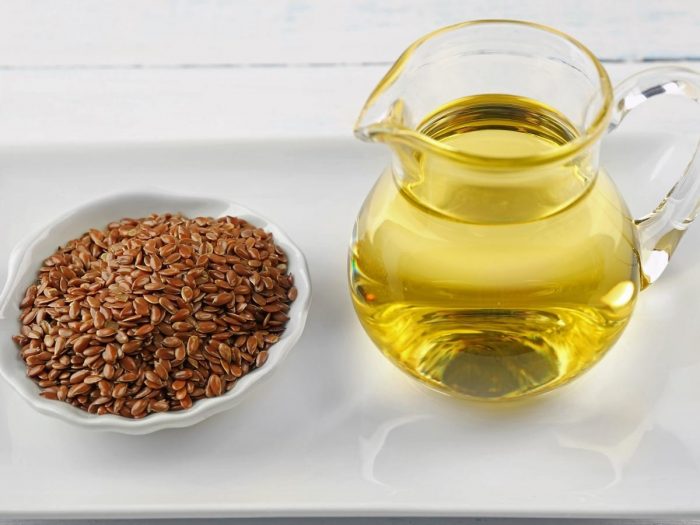
Flaxseed oil comes from ripened flaxseeds that manufacturers have cold pressed to extract the oil. Photo Credit: Shutterstock
Anticancer Potential
The Frontiers in Nutrition [3] journal published a study in 2018 suggesting that flaxseeds may help to reduce the risk of breast cancer and might also reduce the tumor size. However, further clinical trials are still required to verify the benefits of flaxseed against breast cancer.
Flaxseeds have also been positively connected to a reduced risk of prostate cancer. Research showed that ground flax is very beneficial for men battling prostate cancer as it is rich in lignans. [4]
Another research by Division of Cancer Prevention and Population Sciences, The University of Texas and many other medical universities claims that flaxseeds help reduce the risk of prostate cancer. The super nutrient that actually does all the work here is dietary lignan, which is abundantly found in flaxseeds. [5]
Prevents Heart Diseases
Flaxseed is a good source flavone C-glycosides, according to “Phytochemicals and Phytopharmaceuticals”. These polyphenolic compounds inhibit lipid peroxidation, platelet aggregation, and capillary permeability and fragility, thus leading to a lower incidence of cardiovascular diseases.
A study by the University of Pennsylvania Health System, Philadelphia, USA suggests that flaxseeds are a good way to lower your risk of cardiovascular diseases. This is because of the presence of alpha-linolenic acid (ALA), fiber, and lignans in them. [6]
Helps Manage Diabetes
Flaxseed is a rich source of both soluble and insoluble dietary fiber. This property of flaxseed aids in maintaining normal blood sugar levels in people suffering from diabetes. A study published in the Nutrition Research (New York N.Y.,) journal says that the daily intake of flaxseed improves glycaemic control in obese men and women with pre-diabetes. Moreover, it also states that flaxseed consumption decreases glucose and insulin and improves insulin sensitivity as part of the habitual diet in obese individuals with pre-diabetes. [7] [8]
Reduces Cholesterol
A study by the Department of Nutritional Sciences, Oklahoma State University, USA found that flaxseed is able to reduce the LDL cholesterol levels in postmenopausal women owing to the presence of omega-3 fatty acids and lignans in it. [9]
The soluble fiber present in flaxseed also helps in maintaining proper gastrointestinal functions, and insoluble fiber plays a vital role in keeping the heart healthy by lowering serum LDL (bad) cholesterol levels.
| Serving Size : | |
|---|---|
| Nutrient | Value |
| Water [g] | 6.96 |
| Energy | 534 |
| Energy [kJ] | 2234 |
| Protein [g] | 18.29 |
| Total lipid (fat) [g] | 42.16 |
| Ash [g] | 3.72 |
| Carbohydrate, by difference [g] | 28.88 |
| Fiber, total dietary [g] | 27.3 |
| Sugars, total including NLEA [g] | 1.55 |
| Sucrose [g] | 1.15 |
| Glucose (dextrose) [g] | 0.4 |
| Calcium, Ca [mg] | 255 |
| Iron, Fe [mg] | 5.73 |
| Magnesium, Mg [mg] | 392 |
| Phosphorus, P [mg] | 642 |
| Potassium, K [mg] | 813 |
| Sodium, Na [mg] | 30 |
| Zinc, Zn [mg] | 4.34 |
| Copper, Cu [mg] | 1.22 |
| Manganese, Mn [mg] | 2.48 |
| Selenium, Se [µg] | 25.4 |
| Vitamin C, total ascorbic acid [mg] | 0.6 |
| Thiamin [mg] | 1.64 |
| Riboflavin [mg] | 0.16 |
| Niacin [mg] | 3.08 |
| Pantothenic acid [mg] | 0.99 |
| Vitamin B-6 [mg] | 0.47 |
| Folate, total [µg] | 87 |
| Folate, food [µg] | 87 |
| Folate, DFE [µg] | 87 |
| Choline, total [mg] | 78.7 |
| Betaine [mg] | 3.1 |
| Lutein + zeaxanthin [µg] | 651 |
| Vitamin E (alpha-tocopherol) [mg] | 0.31 |
| Tocopherol, gamma [mg] | 19.95 |
| Tocopherol, delta [mg] | 0.35 |
| Vitamin K (phylloquinone) [µg] | 4.3 |
| Fatty acids, total saturated [g] | 3.66 |
| 14:0 [g] | 0.01 |
| 15:0 [g] | 0.01 |
| 16:0 [g] | 2.17 |
| 17:0 [g] | 0.02 |
| 18:0 [g] | 1.33 |
| 20:0 [g] | 0.05 |
| 22:0 [g] | 0.05 |
| 24:0 [g] | 0.03 |
| Fatty acids, total monounsaturated [g] | 7.53 |
| 16:1 [g] | 0.02 |
| 18:1 [g] | 7.36 |
| 20:1 [g] | 0.07 |
| 22:1 [g] | 0.01 |
| 24:1 c [g] | 0.06 |
| Fatty acids, total polyunsaturated [g] | 28.73 |
| 18:2 [g] | 5.9 |
| 18:3 [g] | 22.81 |
| 20:2 n-6 c,c [g] | 0.01 |
| Stigmasterol [mg] | 11 |
| Campesterol [mg] | 45 |
| Beta-sitosterol [mg] | 90 |
| Tryptophan [g] | 0.3 |
| Threonine [g] | 0.77 |
| Isoleucine [g] | 0.9 |
| Leucine [g] | 1.24 |
| Lysine [g] | 0.86 |
| Methionine [g] | 0.37 |
| Cystine [g] | 0.34 |
| Phenylalanine [g] | 0.96 |
| Tyrosine [g] | 0.49 |
| Valine [g] | 1.07 |
| Arginine [g] | 1.93 |
| Histidine [g] | 0.47 |
| Alanine [g] | 0.93 |
| Aspartic acid [g] | 2.05 |
| Glutamic acid [g] | 4.04 |
| Glycine [g] | 1.25 |
| Proline [g] | 0.81 |
| Serine [g] | 0.97 |
| Hydroxyproline [g] | 0.18 |
| Sources include : USDA [10] | |
Skin Care
Flaxseed oil can heal inflamed skin areas in cases of acne, rosacea, and eczema. The topical application of this oil heals sunburns effectively.
Hair Care
Flaxseed oil can help brittle hair and nails and prevent them from splitting. It is also effective against irritating scalp conditions caused by eczema.
Rich in Vitamins
Flaxseed is rich in most B complex vitamins and vitamin E, as well as minerals such as magnesium, potassium, and iron. Vitamin E is essential for healthy skin and bones. Potassium maintains nerve health and iron is a vital component of red blood cells and many enzymes that affect our general metabolism.
Good Source of Protein
Flaxseed is a rich source of dietary proteins, having a high essential amino acid index, and providing most of the daily intake of proteins that our bodies need.
Rich in Omega 3’s & Fights Inflammation
Flaxseed is a great source of omega-3 fatty acids, preceded only by fish oil. The omega-3 fatty acid is the most active agent that fights inflammation in the body. Inflammation is a leading cause of heart diseases, asthma, allergies, diabetes, and even certain cancers. Flaxseed has also been shown to reduce the rate of kidney inflammation in cases of nephritis.
Gluten-free
Flaxseeds are 100% free of gluten, and therefore can be eaten by those with gluten intolerance or celiac disease. Although, it is important to note that every product that says it contains flaxseeds doesn’t automatically approve as gluten-free.
Weight loss
These seeds can also help in weight loss because they are rich in fiber and certain other healthy fats. They also help improve metabolism, lower the risk of digestive problems, and improve obesity.
Blood Pressure
As per the Hypertension journal, including flaxseeds in the diet is recommended for people suffering from high blood pressure. The omega 3 and fiber in this health food can lower blood pressure, and thereby prevent the risk of stroke, hypertension, and other heart ailments. [11] [12]
Digestion
The presence of plant-based lignans, omega 3s, oils, and fiber in flaxseed help in improving the digestion of your body, by promoting lubrication and preventing constipation.
Boosts Immunity
The alpha-linolenic acid and the lignans found in flaxseed boost the immune response in the body and prevent inflammatory diseases such as rheumatoid arthritis, psoriasis, and an autoimmune disorder called lupus.
Reduces Menopausal Symptoms
Lignans, in flaxseed, can be used as an alternative to hormone replacement therapy due to their estrogenic properties, and thereby reduce the symptoms of menopause and arthritis in menopausal women.
Reduces Ovarian Dysfunction
In menstruating women, regular consumption of flaxseed is shown to inhibit cycle changes and a reduction in the ovarian dysfunction.
Reduces Dry Eye
Flaxseed consumption can reduce “dry eye” syndrome. Also, the omega-3 fatty acids can reduce the risk of macular degeneration, an eye disease caused by damaged nerves in the eye.
Chia Seeds vs Flax Seeds
While there are many aspects where chia seeds and flax seeds share the same nutrition profile, there are places where they are quite the opposite of each other. Let us discuss them in detail below.
- The alpha-linolenic acid content in flax seeds greater than that of chia seeds.
- While flax seeds are a great source of plant-based lignans, chia seeds are not. Although chia seeds do contain other antioxidants.
- Chia seeds contain more fiber than flax seeds.
- Chia seeds are a rich source of calcium, while flaxseed is not.
Having noted the differences, one should also note that both serve their own unique benefits from their own unique nutrition profile, so saying that one is better than the other would not be right.
Side Effects
Consume ground flaxseed to enjoy all the benefits as whole seeds do not release their nutrients in the body effectively. Whole flaxseeds may cause the following due to their high fiber content:
- Bloating
- Stomach discomfort
- Gas
- Loose stools
It can also lower your appetite in some cases and may result in abnormal hormonal changes when consumed in large quantities.
For now, you should just add some flaxseeds while making muffins and savour the tasty treat!