The health benefits of organic milk may include having higher levels of omega 3 fatty acids and CLA, more antioxidants, and more vitamins than regular milk. Milk is one of the most important components of our diet as its consumption ensures healthy growth and development. Modern dairies, however, use different types of chemicals in milk production.
These may include pesticides and fertilizers for growing the fodder, as well as hormones and antibiotics that are fed to the cows. The excessive use of these chemicals in conventional milk production, and the harmful effects that they create have resulted in an increased demand for organic milk from health-conscious consumers.
Currently, only 3% of the total milk sold in the US is organic milk. However, this segment is growing rapidly at a rate of over 20% per annum. The market for organic milk is growing in other countries as well, with over 30% in the UK. Why is the demand for organic milk increasing so rapidly? The apparent answer is that this type of milk is healthier than conventional milk.
While organic milk retains all the benefits provided by non-organic milk, it also provides certain additional benefits. The health benefits of organic milk were researched by a team from the Danish Institute of Agricultural Research. The research, which was presented at one of the Annual Conferences of the UK’s Soil Association, and is considered to be groundbreaking. The Organic Milk Suppliers Cooperative also provides various benefits of organic milk. [1]
Health Benefits of Organic Milk
The health benefits of organic milk include the following:
May Provide More Omega 3
Organic milk is known to have more omega 3 than non-organic milk. But why is Omega 3 so important? Omega3 is an essential fatty acid that is required for healthy growth and its has been the reason for various health problems that have seemed to increase in recent years. Regular intake of omega 3 fatty acids may protect you from various diseases and may help to reduce the incidence of heart disease, inflammation (in skin diseases like eczema), cancer, and arthritis. Recent research suggests that intake of diet rich in omega-3 fatty acids may reduce or delay the onset of Amyotrophic lateral sclerosis (ALS) also known as Lou Gehrig’s disease. [2] [3]
Research conducted at the University of Aberdeen shows that organic milk has about 71% more omega 3 than conventional milk. Why does this have more Omega 3 than conventional milk? According to the research conducted by Dr. Richard Dewhurst and his team at the Institute of Grassland and Environmental Research, organic cows, which are pasture grazed, are fed with a higher quantity of red clover than the conventional cows. Red clover contains a large amount of Omega 3, which passes to the cow and subsequently to people through its milk. Furthermore, the ratio of omega 3 to omega 6 is higher in organic milk. Although omega 6 is also required for healthy growth, excessive amounts of omega 6 can be bad at times. Increased consumption of vegetable oils such as corn, soybeans, and sunflowers has resulted in an increased intake of omega 6 in our body. Therefore, organic milk consumption serves as an effective means of controlling the balance between Omega 3 and Omega 6 in our body, which is integral for heart health and cardiovascular conditions. [4]
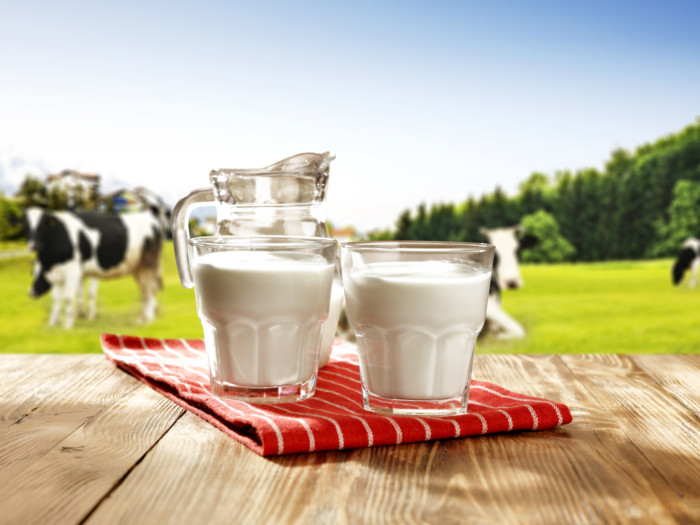
Cow milk is loaded with numerous essential nutrients and is known as a healing food. Photo Credit: Shutterstock
More Conjugated Linoleic Acid
Conjugated linoleic acid (CLA) increases the body’s metabolic rate, immunity to disease, and muscle growth. It also reduces abdominal fat, cholesterol, and allergic reactions. It is worth noting that the human body cannot produce this substance and most of our CLA intake happens through the milk and milk products that we consume.
Now, you will be surprised to know that cows grazed on pastures produce 500% more CLA in their milk than cows that are fed fodder. This definitely calls for a preference for organic milk over non-organic milk. Recent animal studies have shown that conjugated linoleic acid (CLA) may be beneficial in cancer treatment. [5]
However, more scientific evidence and research are needed to establish the benefit of milk in preventing cancer. [6]
Possibly No chemical contamination
Organic cows are grazed on pastures that are grown through organic means. Therefore, their milk is not contaminated with harmful chemicals such as the residues of pesticides, fertilizers, and hormones.
Furthermore, this possibly nutrient-rich organic milk does not contain traces of antibiotics, GM feed, urea, or fertility hormones, as these are not fed to the cows to increase their milk production.
You can also get valuable information about the health benefits of raw milk and milk in general, on the webpage of the Organic Pastures Dairy Company. It might clarify your doubts about processes such as homogenization and pasteurization, and the role of enzymes and immunoglobulins.
By consuming organic milk, you may also ensure that you do not harm the environment. The pesticides used in non-organic farming are wiping out numerous species of beneficial insects, butterflies, and birds. It is estimated that about 672 million birds are affected by a large amount of pesticides used on US agricultural farms and 10% of these are killed due to these pesticide-induced illnesses.
Possibly More Antioxidants
Organic milk is known to have a two to three times higher concentration of antioxidants like lutein and zeaxanthin than non-organic milk. Lutein is extremely important for eye health and is effective in preventing numerous eye diseases such as macular degeneration and cataracts. [7]
Zeaxanthin is also important for good eye health. It may protect the eye from UV damage and the impact of free radicals. It is very helpful in preventing cataracts, diabetic retinopathy, glaucoma and macular degeneration. [8]
Research conducted by the Danish Institute of Agricultural Sciences and the University of Newcastle has shown that organic milk has a higher concentration of vitamins such as vitamin A and E than conventional milk. Since organic cows graze on fresh grass and clover, the milk they produce has about 50% higher Vitamin E and 75% higher beta carotene. [9] [10]
Vitamin E can be useful for protecting your body’s cells from free radicals and thus delays signs of aging. It also reduces the incidence of various chronic diseases including heart disease and cataracts. Normally, a person requires 15 milligrams of Vitamin E in the form of alpha-tocopherol per day. However, adults in the US consume only 8-12 milligrams daily, on average. This deficiency in vitamin E consumption can be fixed by drinking organic milk daily.
Beta carotene is converted by our body into Vitamin A. Vitamin A, also called retinol, is useful for guaranteeing strong eyesight, increasing resistance to infections, good skin, bone growth, tooth development, reproduction and gene expression.
Organic Milk in Schools
School children consume milk in numerous drinks and dishes in the form of tea, coffee, chocolates, cheese, and butter. Imagine the amount of milk your children consume each day through these products in schools. Would you not want your children to have improved eye-sight and a stronger immune system by asking your child’s school to shift to organic milk?
The numerous health benefits offered by organic milk have encouraged many schools to shift to organic milk. In others, where conventional milk is still used, parents are lobbying to urge school authorities to use organic milk in vending machines, cafeterias, and lunchrooms.
There is also a downside to this. The extensive support provided by organic milk manufacturers to these parents has been questioned by many. Some manufacturers have started campaigning that non-organic milk is harmful, though it has been cleared by the FDA as safe and healthy. You should not pay heed to manufacturers who publicize conventional milk as harmful and should focus only on the health benefits of organic milk over non-organic milk. Decide along with the school authorities according to the benefits of one rather than the dangers of the other, and don’t fall prey to the marketing gimmicks of certain isolated organic milk manufacturers.