The various benefits of organic farming for small farmers all over the world include a high premium, low capital investment, the ability to achieve higher premiums in the market, and the ability to use traditional knowledge. According to research conducted by the Office of Evaluation and Studies (OE), at the International Fund for Agriculture Development (IFAD), small farmers in Latin America, China, and India can benefit dramatically from organic farming and will help in alleviating poverty in these countries. [1]
Organic farming refers to means of farming that does not involve the use of chemicals such as chemical fertilizers and chemical pesticides. Numerous small farmers practice organic farming; however, since they are unaware of the market opportunities, they are not able to reap the benefits of organic farming.
Benefits of Organic Farming for Small Farmers
Listed below are some of the advantages of organic farming for small farmers:
High Premium
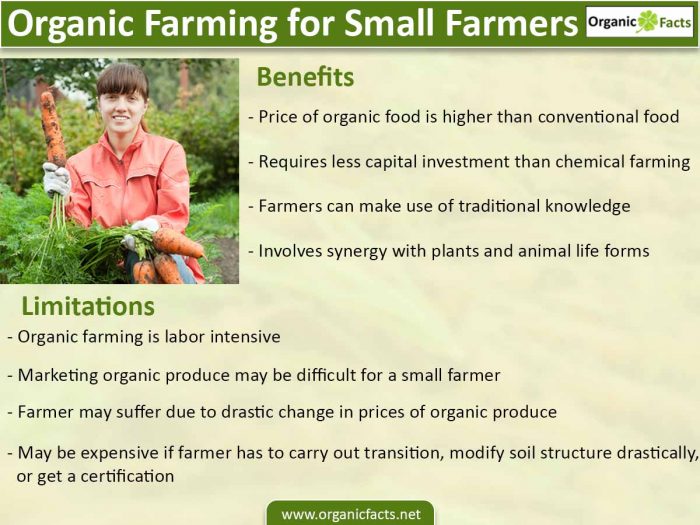
Organic food is normally priced 20-30% higher than conventional food. This premium is very important for a small farmer whose income might only be sufficient to feed his/her family with one meal.
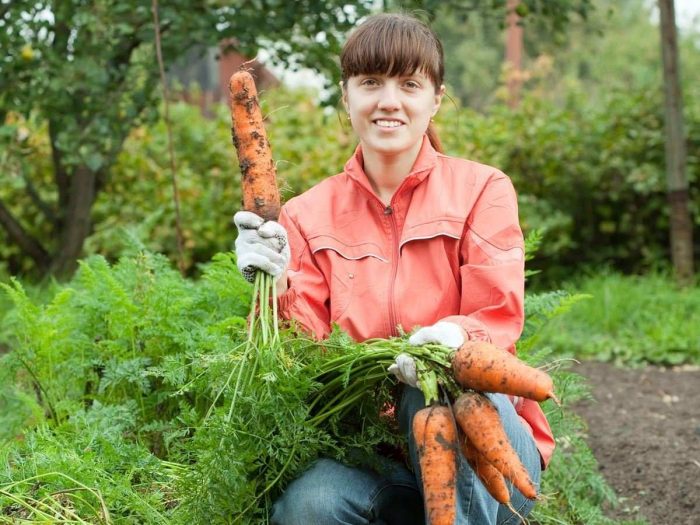
The rules for when to harvest depend on what vegetables you are growing. Photo Credit: Shutterstock
Low Investment
Organic farming normally does not involve capital investment as high as that required in chemical farming. Furthermore, since organic fertilizers and pesticides can be produced locally, the yearly costs incurred by the farmer are also low. Agriculture greatly depends on external factors such as climate, pests, and disease. Furthermore, most of the small farmers are dependent on natural rain for water. Therefore, in cases of natural calamity, pest or disease attack, or irregular rainfall, when there is a crop failure, small farmers practicing organic farming have to suffer less as their investments are low. It should be noted that while shifting from chemical farming to organic farming, the transition might be costly.
Less Dependence on Money Lenders
Many small farmers worldwide commit suicide or suffer from intense economic strife due to increasing debt. Since chemical inputs, which are very costly, are not required in organic farming, small farmers are not as dependent on money lenders. Crop failure, therefore, does not lead an organic farmer into enormous debt, and does not force him to take any extreme steps.
Synergy with Life Forms
Organic farming involves synergy with various plant and animal life forms. Small farmers are able to understand this synergy easily and therefore find it easy to implement the organic farming techniques.
Traditional Knowledge
Small farmers have an abundance of traditional knowledge with them and within their community. Most of this traditional knowledge cannot be used for chemical farming. However, when it comes to organic farming, farmers can make use of this traditional knowledge. Furthermore, in cases of organic farming, small farmers are not dependent on those who provide chemical know-how.
Organic food has become incredibly popular. Photo Credit: Shutterstock
Limitations of Organic Farming for Small Farmers
Small farmers can benefit drastically by practicing organic farming as it helps them get a high premium for their produce and reduces the capital investment involved in farming. Organic agriculture for small farmers, however, has its own limitations.
These limitations were studied by the Office of Evaluation and Studies (OE), International Fund for Agriculture Development (IFAD). They include the following: [2]
Organic farming is labor intensive. Hence, it is beneficial for a small farmer who has abundant labor in his/her family. A small farmer who does not have sufficient labor at home may find it difficult to hire external labor. Therefore, organic farming may not be feasible for him/her.
Organic farming may also turn out to be expensive given the situation when a small farmer has to carry out the transition, modify the soil structure drastically, or get a certification.
Although a farmer can use a good deal of traditional knowledge in organic farming, since the practice is not as common as chemical farming, it is difficult for good scientific organic farming practices to propagate to the small farmers.
Certification is also an important aspect of organic farming. In many cases, providing education related to necessary certifications and the guidelines that need to be followed for obtaining the certifications may be difficult. The cost of obtaining a certification is also high and out of the reach of a small farmer. Hence a small farmer can get into certification-based organic farming only when there is a large group of 500-2000 farmers and the government funds the certification process.
Since organic produce is not traded in many markets, marketing the organic produce may be difficult for a small farmer.
Small farmers can successfully practice organic farming with proper guidance from public and non-governmental organizations. However, the complexities of problems that these organizations may have to deal with and the costs involved in running these organizations may make the entire activity non-viable.
In organic farming, soil fertility needs to be replenished with the regular application of organic fertilizers. If the organic fertilizers are not produced locally, it might be difficult for the small farmer, who would purchase the fertilizers in small quantities to obtain them from elsewhere. Furthermore, due to low economies of scale, there might be a huge transportation cost associated with the organic fertilizers obtained from long distances.
It has also been observed that organic food prices are not stable and continue fluctuating from time to time. In such a scenario, a low price might drastically affect a small farmer.
Since the volume of organic food production is low (about 1-2% of total food production), it is very difficult to implement social security measures, such as a minimum support price.
Further Reading: