The health benefits of coconut oil include improving heart health by increasing HDL cholesterol levels, promoting weight loss, relieving symptoms of yeast infections, skin and hair care, improving digestion, and boosting immunity. The oil is not only used in tropical countries, where coconut plantations are abundant, but also in the U.S., Canada, Europe, and Australia. Now, we rediscover the wonders this oil creates and why it gained popularity throughout the world.
Let us have a look at some of the known benefits of coconut oil.
Health Benefits
Coconut oil has several health benefits, the most important one being its usefulness in hair care and skincare.
Increases HDL Cholesterol Levels
According to a report in the journal Harvard Health Publishing, coconut oil helps to increase the levels of HDL cholesterol (good cholesterol) which aids in improving heart health. However, the report advised using coconut oil sparingly as the bulk of current findings conducted on this oil and its effect on cholesterol levels are based on short-term studies. [1]
Promotes Weight Loss
Coconut oil, which contains a significant amount (65%) of medium-chain triglycerides (MCTs), has been linked to increased calorie burning and potential weight loss in research studies. Some studies, like the one published in Lipids, suggest that coconut oil may be useful in reducing abdominal fat. It’s also known to be easier on the digestive system compared to other edible oils. [2] [3] [4]
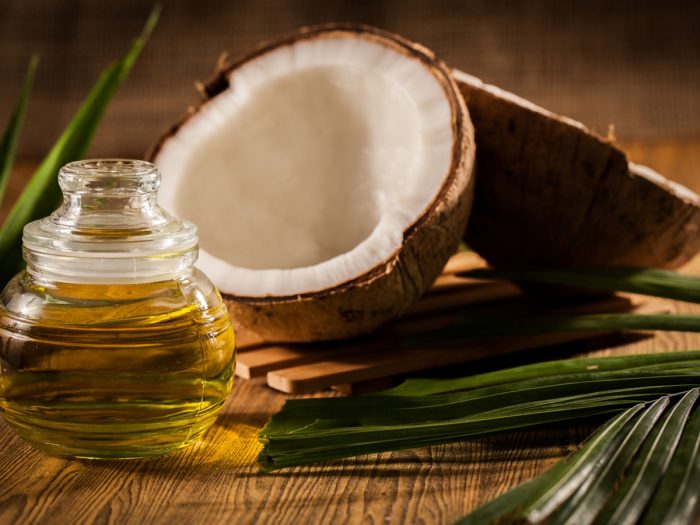
Look for organically sourced coconut oil whenever you can. Photo Credit: Shutterstock
Another pilot study published in the journal ISRN Pharmacology states that coconut oil increases the body’s metabolic rate by removing stress on the pancreas, thereby, burning energy and helping obese and overweight people. [5]
However, it’s crucial to use coconut oil in moderation because it’s calorie-dense and excessive consumption can lead to weight gain. Keep in mind that more conclusive research is needed to confirm these findings, even though there’s potential for calorie burning with MCTs. [6]
May Act As A Quick Energy Source
Coconut oil may act as a quick source of energy, due to its medium-chain triglycerides (MCTs) content. Unlike other saturated fats, these MCTs undergo a unique metabolism that bypasses the usual digestive process and head straight to the liver, where they are rapidly converted into energy. This process is akin to how our body handles carbohydrates, making MCTs an excellent choice for an energy boost. [7]
Coconut oil is often used by athletes, bodybuilders, and by those who are dieting. This is because it contains fewer calories than other oils. Its fat content is easily converted into energy, and it does not lead to the accumulation of fat in the heart and arteries. [8] [9]
Improves Heart Health
There are multiple studies that show coconut oil is one of the most beneficial fats for heart health. A 2016 review published in the Ghana Medical Journal found that 50 percent of fats found in coconut oil are medium-chain triglycerides (MCTs), such as lauric acid. These acids are absorbed easily by the intestine and can be used by the body to produce energy. [10]
Research published in the journal Nutricion Hospitalaria conducted a study on 116 coronary artery disease patients. It was observed that a diet rich in extra virgin coconut oil led to an increase in good cholesterol levels (HDL cholesterol) and a decrease in bad cholesterol levels (LDL cholesterol). [11]
Another study suggests that the intake of this oil may help in maintaining healthy lipid profiles in pre-menopausal women. However, anything in excess can be bad. If you are using coconut oil often, check your cholesterol levels regularly. If you find them increasing, it is better to stop or cut down on them. In any case, consult a professional medical practitioner before you start consuming it extensively. [12]
Promotes Healthy Hair
Coconut oil is used extensively in the tropical, coastal regions for hair care. Many women apply oil regularly for a thick and lustrous mane. This dense, butter-like oil helps in the healthy growth of your hair and adds luster to those strands. A study published in the Journal of Cosmetic Science found compared coconut oil to other oils like sunflower and mineral oils. Of the three, coconut oil was the only oil that reduced protein loss when used as a pre-wash or post-wash product. This held true for both damaged and undamaged hair. Due to its low molecular weight, it is able to penetrate the hair shaft and prevent hair damage. [13] [14]
The best variety for healthy hair is organic extra virgin coconut oil. Just apply it topically to your hair or use a coconut oil hair mask.
In a 2021 study, it was discovered that coconut oil’s deep penetration into hair strands not only significantly increased fiber core flexibility but also strengthened hair, preventing breakage, particularly in tension-inducing situations like hair twisting. Also, it is an excellent conditioner and helps the re-growth process of damaged hair. It also provides the essential proteins required for nourishing and healing damaged hair. Another research published in the Journal of Cosmetic Science indicates that this oil provides better protection to hair from damage caused by too much moisture. [15] [16]
By regularly massaging your head with it, you can ensure that your scalp is dandruff free, even if your scalp is chronically dry. It also helps in keeping your hair and scalp free from lice infestation.
All-Purpose Skin Care Aid
Did you know that coconut oil works great for the skin? According to a 2018 study published in the International Journal of Molecular Science, coconut oil is found to be rich in antibacterial, anti-aging, antioxidant, and anti-inflammatory properties. [17]
It may also aid in treating various skin problems including the following:
- Eczema & psoriasis: The topical application can reduce the severity of these conditions. [18]
- UV radiation: Research suggests that the use of coconut oil blocks 20% of UV rays, thus, protecting the skin against the harmful effects of UV rays.
- Dermatitis: A study published in Evidence-Based Complementary and Alternative Medicine suggests that coconut oil is effective in relieving symptoms of atopic dermatitis (as compared to mineral oil). This was backed up by another study published in the International Journal of Dermatology which found that virgin coconut oil is more beneficial than mineral oil-based formulations when treating children suffering from mild to moderate atopic dermatitis. [19] [20]
- Skin wound: Virgin coconut oil helps to speed up wound healing given its indicated skincare properties. [21]
- Xerosis or dry skin: Research shows that coconut oil is a safe and effective moisturizer for the skin. Pure cold-pressed, organic, non-GMO coconut oil is an excellent massage oil that can be used for all types of skin, including dry skin. [22] [23]
- Antimicrobial activity: Monolaurin is an active component of coconut oil found to be antibacterial, antiviral, and antifungal in nature. It protects against the harmful effects of bacteria, such as Staphylococcus aureus that cause pimples and other skin infections. [24] [25]
- Burns: The use of coconut oil helps in providing relief from burns. [26]
- Other: It also helps repair the skin barrier. [27]
Unlike mineral oil, there is little chance of any adverse side effects because of the use of coconut oil for skin care. It has been safely used for thousands of years to prevent dryness and flaking of the skin. Additionally, it also delays the appearance of wrinkles and sagging of skin, which normally accompany aging. It is today preferred by natural skincare brands as the base ingredient for various body care products like soaps, lotions, and creams.
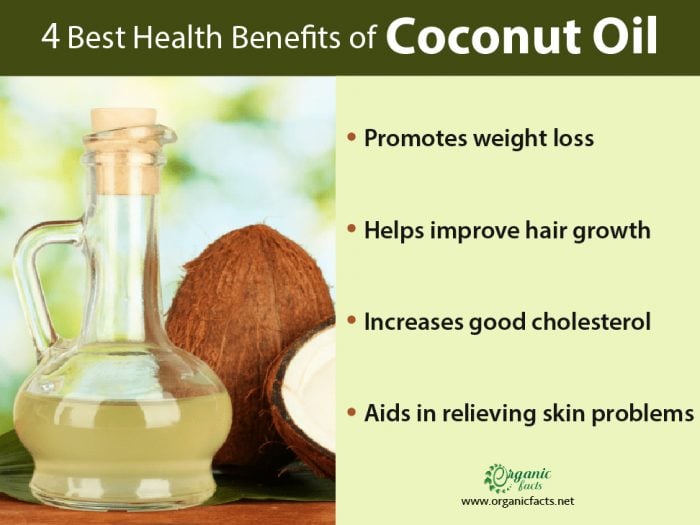
Coconut oil has a high melting point – about 24 to 25 degrees Celsius, or 76-78 Fahrenheit.
Promotes Dental Care
Many research studies suggest that the use of oil pulling is effective against various dental issues such as plaque and halitosis. There is limited evidence that supports the topical use of coconut oil for the prevention and treatment of atopic dermatitis. Similarly, more studies are required to confirm “oil pulling” for the prevention of dental caries. [28] [29] [30]
Effective in Treatment of Epilepsy
MCT ketogenic diets are effective in treating refractory childhood epilepsy. According to research in the Journal of the Medical Association of Thailand, MCT diets have effectively treated Thai children who suffer from intractable epilepsy. This shows that as an effective source of the MCT diet, coconut oil is a good addition to ketogenic diets that counter seizures and sensations. [31]
Other Benefits
- Antimicrobial Effects: According to the Coconut Research Center, [32] coconut oil kills the viruses that cause influenza, hepatitis, herpes, and other serious health risks. It also kills bacteria that cause ulcers, throat infections, urinary tract infections, and gonorrhea. Finally, coconut oil may also aid in eliminating fungi and yeast that cause ringworm, athlete’s foot, thrush, and diaper rash. [33]
- Kidney & Liver Health: The presence of medium-chain triglycerides and fatty acids in coconut oil may help in preventing kidney, liver, and gallbladder diseases. However, more scientific research is needed to establish these benefits. [34]
- Digestive & Immune System: The saturated fats such as lauric acid and monolaurin present in coconut oil have antimicrobial, antibacterial, and antiviral properties. These properties help combat various bacteria, fungi, and parasites that cause various health issues. [35]
Using this oil has been shown to mildly help the following:
- Stress relief: Pure coconut carrier oil for aromatherapy is very soothing and helps remove stress. Applying it to the head, followed by a gentle massage, helps eliminate mental fatigue. Research shows that virgin coconut oil gives relief from stress and has antioxidant properties. [36] [37]
- Wound healing: When applied to infected areas, coconut oil forms a chemical layer that protects the infected body part from external dust, air, fungi, bacteria, and viruses. Extra virgin coconut oil is also effective and safe when used as a skin moisturizer. [38] [39]
- Diabetes: Pure coconut oil helps in controlling blood sugar and improves the secretion of insulin. It also promotes the effective utilization of blood glucose, thereby, preventing and managing diabetes. [40] [41]
- Bones: As mentioned earlier, coconut oil improves the ability of our body to absorb important minerals. These include calcium and magnesium, which are necessary for the development of bones. Thus, it is very useful for women who are prone to osteoporosis after middle age. [42]
Serving Size : Nutrient Value Water [g] 0.03 Energy 892 Energy [kJ] 3730 Total lipid (fat) [g] 99.06 Ash [g] 0.03 Calcium, Ca [mg] 1 Iron, Fe [mg] 0.05 Zinc, Zn [mg] 0.02 Choline, total [mg] 0.3 Vitamin E (alpha-tocopherol) [mg] 0.11 Tocopherol, beta [mg] 0.6 Tocopherol, delta [mg] 0.18 Tocotrienol, alpha [mg] 2.17 Tocotrienol, beta [mg] 0.13 Tocotrienol, gamma [mg] 0.36 Tocotrienol, delta [mg] 0.25 Vitamin K (phylloquinone) [µg] 0.6 Fatty acids, total saturated [g] 82.48 4:0 [g] 0.01 6:0 [g] 0.48 8:0 [g] 6.8 10:0 [g] 5.39 12:0 [g] 41.84 14:0 [g] 16.65 15:0 [g] 0.02 16:0 [g] 8.64 17:0 [g] 0.01 18:0 [g] 2.52 20:0 [g] 0.08 22:0 [g] 0.02 24:0 [g] 0.03 Fatty acids, total monounsaturated [g] 6.33 16:1 [g] 0.02 16:1 c [g] 0.02 18:1 [g] 6.27 18:1 c [g] 6.25 20:1 [g] 0.04 Fatty acids, total polyunsaturated [g] 1.7 18:2 [g] 1.68 18:2 n-6 c,c [g] 1.68 18:3 [g] 0.02 18:3 n-3 c,c,c (ALA) [g] 0.02 Fatty acids, total trans [g] 0.03 Fatty acids, total trans-monoenoic [g] 0.02 18:1 t [g] 0.02 18:2 t not further defined [g] 0.01 Fatty acids, total trans-polyenoic [g] 0.01 Phytosterols [mg] 86 Sources include : USDA [43]
How do The Fats in Coconut Oil Help You?
According to the USDA National Nutrient Database for Standard Reference, coconut oil is a good source of energy, lipids, and various other nutrients. It contains vitamins and minerals such as vitamin E, vitamin K, calcium, zinc, and iron. [44]
More than 90% of coconut oil consists of FFAs or free fatty acids, saturated fats (Don’t panic! It’s not as bad as it sounds, read until the end of this and your opinion may change). A 2016 study suggests that coconut oil also contains a few unsaturated fatty acids, such as monounsaturated fatty acids and polyunsaturated fatty acids. Virgin coconut oil is no different from this. [45]
Saturated fatty acids: Most of them are medium-chain triglycerides, which are supposed to assimilate well into the body’s systems.
- Lauric acid: It is the chief contributor, representing more than 40% of the total, followed by capric acid, caprylic acid, myristic acid, and palmitic acid. The human body converts lauric acid into monolaurin. Lauric acid is helpful in dealing with viruses and diseases. [46]
- Capric acid: It reacts with certain enzymes secreted by other bacteria, which subsequently converts it into a powerful antimicrobial agent, monocaprin. [47]
- Caprylic acid, caproic acid, and myristic acid: They are rich in antimicrobial and antifungal properties [48]
- Stearic acid: This acid has cleansing and solidifying properties. Hence, it is used for skincare products.
- Unsaturated fatty acids: The oil contains polyunsaturated fatty acids, linoleic acid, monounsaturated fatty acids, oleic acid.
- Polyphenols: Coconut contains gallic acid, which is also known as phenolic acid. These polyphenols are responsible for the fragrance and the taste of coconut oil. Virgin coconut oil is rich in these polyphenols.
- Derivatives of fatty acid: It also contains betaines, ethanolamide, ethoxylates, fatty esters, fatty polysorbates, monoglycerides, and polyol esters.
- Derivatives of fatty alcohols: Apart from the above-mentioned fatty acids it also contains fatty chlorides, fatty alcohol sulfate, and fatty alcohol ether sulfate.
Uses of Coconut Oil
Top uses of coconut oil include:
- Skin moisturizer
- Nourish scalp and increase hair growth
- Culinary applications
- Carrier oil
Use as a carrier oil: Carrier oils easily penetrate or absorb into the skin, facilitating seepage or absorption of other oils (such as essential oils) and herbal extracts when mixed into it. It is easily absorbed through the skin’s pores and thus is used as a carrier oil.
Coconut oil is expensive in several countries; however, in tropical countries, its cost is low enough to make it affordable as a carrier oil. It is best to use pure and fractionated coconut massage oil for skincare. [49]
Where to buy?
Coconut oil is easily available online and in supermarkets. All you need to do is choose the right product based on your requirements
- Organic extra virgin coconut oil, unrefined
- Organic virgin coconut oil, unrefined
- Fractionated coconut oil
- Refined coconut oil
- Pure coconut oil for hair and skin
How to use and store?
Unlike most other oils, coconut oil has a high melting point – about 24 to 25 degrees Celsius, or 76-78 Fahrenheit. Therefore, it turns solid whenever the temperatures lower below 76°F. You will often find it in this form. It does not have to be kept in the refrigerator. If you want to liquify the solidified oil, just melt it under heat.
- If you are using it for topical purposes, especially hair care, just melt the oil (if it is solid) by keeping the bottle in the sun or soaking it in warm water. You can also take some oil out and put it in a small bowl and warm it. Then, take the oil on your palm and apply it to your hair.
- You can use coconut oil for cooking your favorite recipes. It can easily replace butter or vegetable oil.
- Coconut oil often comes in wide-mouthed containers. You also get it in a pack (tetra-pack or plastic pouch). After opening the pack, be sure to keep the oil in containers with a tight lid and wide mouth. This will help you scoop it out with a spoon if it solidifies. Also, be sure you seal the container well to avoid any attention of insects or rodents.
- Despite its benefits, a complete dietary switch to coconut oil is not recommended. This will mean that you will lose other benefits from more traditional oils and dairy products. However, it is a nice addition and flavor to add to any cook’s repertoire.