The powerful health benefits of wheat may include its ability to control obesity, boost energy, inhibit type 2 diabetes, improve metabolism, and prevent asthma and gallstones. It also boosts digestion.
What is Wheat?
Wheat is the most common cereal grain, which comes from a type of grass (Triticum). The whole grain kernel of wheat, composed of bran (outer layer), wheat germ, and endosperm (innermost part), is an immense energy source. Wheat originated in Southwestern Asia, but today it is one of the top cereal crops grown in several countries for human consumption. Commonly, wheat cultivation is done at higher latitudes. It is primarily used for baking products such as bread, bagels, cakes, and muffins. [1]
| Serving Size : | |
|---|---|
| Nutrient | Value |
| Water [g] | 47.75 |
| Energy | 198 |
| Energy [kJ] | 828 |
| Protein [g] | 7.49 |
| Total lipid (fat) [g] | 1.27 |
| Ash [g] | 0.96 |
| Carbohydrate, by difference [g] | 42.53 |
| Fiber, total dietary [g] | 1.1 |
| Calcium, Ca [mg] | 28 |
| Iron, Fe [mg] | 2.14 |
| Magnesium, Mg [mg] | 82 |
| Phosphorus, P [mg] | 200 |
| Potassium, K [mg] | 169 |
| Sodium, Na [mg] | 16 |
| Zinc, Zn [mg] | 1.65 |
| Copper, Cu [mg] | 0.26 |
| Manganese, Mn [mg] | 1.86 |
| Selenium, Se [µg] | 42.5 |
| Vitamin C, total ascorbic acid [mg] | 2.6 |
| Thiamin [mg] | 0.23 |
| Riboflavin [mg] | 0.16 |
| Niacin [mg] | 3.09 |
| Pantothenic acid [mg] | 0.95 |
| Vitamin B-6 [mg] | 0.27 |
| Folate, total [µg] | 38 |
| Folate, food [µg] | 38 |
| Folate, DFE [µg] | 38 |
| Fatty acids, total saturated [g] | 0.21 |
| 16:0 [g] | 0.19 |
| 18:0 [g] | 0.01 |
| Fatty acids, total monounsaturated [g] | 0.15 |
| 18:1 [g] | 0.15 |
| Fatty acids, total polyunsaturated [g] | 0.56 |
| 18:2 [g] | 0.53 |
| 18:3 [g] | 0.03 |
| Tryptophan [g] | 0.12 |
| Threonine [g] | 0.25 |
| Isoleucine [g] | 0.29 |
| Leucine [g] | 0.51 |
| Lysine [g] | 0.25 |
| Methionine [g] | 0.12 |
| Cystine [g] | 0.13 |
| Phenylalanine [g] | 0.35 |
| Tyrosine [g] | 0.28 |
| Valine [g] | 0.36 |
| Arginine [g] | 0.43 |
| Histidine [g] | 0.2 |
| Alanine [g] | 0.3 |
| Aspartic acid [g] | 0.45 |
| Glutamic acid [g] | 1.87 |
| Glycine [g] | 0.31 |
| Proline [g] | 0.67 |
| Serine [g] | 0.34 |
| Sources include : USDA [2] | |
Nutrition
Unrefined wheat contains complex carbohydrates, dietary fiber, and a moderate amount of proteins. According to the USDA National Nutrient Database, sprouted wheat is rich in catalytic elements, mineral salts, calcium, magnesium, potassium, sulfur, chlorine, arsenic, silicon, manganese, zinc, iodine, copper, vitamin B, and vitamin E. It is abundant in antioxidants, especially in carotenoids such as beta-carotene. [3] [4]
Wheat germ, which is the heart of the kernel, is particularly rich in vitamin E. It is known to be the main source of the vitamin B complex in dietary structures throughout the world and includes vitamins like thiamin, folic acid, vitamin B6, and minerals like manganese, magnesium, and zinc. Wheat germ oil improves strength and increases lifespan.
Wheat bran, the outer layer of the kernel, is rich in phytochemicals and antioxidants called lignans, ferulic acid, phytic acid, alkylresorcinols, lutein, flavonoids, and saponins. [5]
Health Benefits
Let us look at the most popular health benefits of wheat in detail:
May Help Control Obesity
Wheat, a whole grain, may have a natural ability to control weight, but this ability is more pronounced among women. Women who consumed whole grain products over long periods showed considerably more weight loss than others. Also, the American Journal of Clinical Nutrition has shown through research that whole wheat, rather than its refined form, is a good choice for obese patients. [6] [7]
May Help Increase Energy
Whole wheat with its vitamin B content may help provide the body with energy, according to a report by the Brain, Performance, and Nutrition Research Centre in Northumbria University, UK. Moreover, the whole grain contains complex carbohydrates, which keep you feeling full longer and gives you energy over a longer period of time. [8]
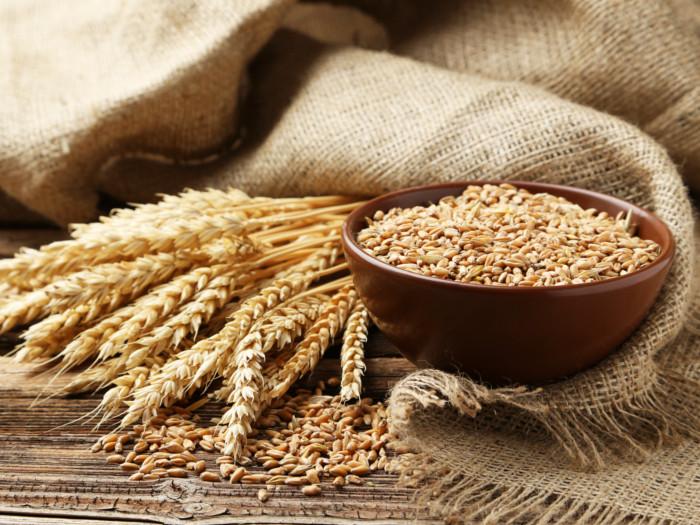
Wheat is a grass widely cultivated for its seed, a cereal grain that is a worldwide staple food. Photo Credit: Shutterstock
May Help Prevent Metabolic Disorders
Whole grains like wheat can be immensely effective in patients with metabolic disorders. Common types of metabolic syndromes include visceral obesity, also known as the “pear-shaped” body, high triglycerides, low levels of protective HDL cholesterol, and high blood pressure. Intake of whole grain products protects against these conditions. Also, research conducted by two dieticians, Janice Harland and Lynne Garton, published in The Nutrition Society showed that a higher intake of whole grains (about three servings per day) was associated with lower BMI and central adiposity. [9] [10]
May Help Prevent Type 2 Diabetes
Wheat is rich in magnesium that acts as a co-factor for more than 300 enzymes. These enzymes are involved in the body’s functional use of insulin and glucose secretion. A cohort study published in PLOS Medicine found that the intake of whole grains like wheat is inversely associated with the risk of type 2 diabetes. Additionally, this effect is stronger for bran than for germ.
May Help Prevent Gallstones
Since whole wheat is rich in insoluble fiber, it can assure a quick and smooth intestinal transit time and lowers the secretion of bile acids. Excessive bile acids are a major cause of gallstone formation. In various surveys by the American Journal of Gastroenterology, it has been proven that whole grain bread and cereals help prevent gallstones. [11]
May Improve Metabolism
The fiber in whole wheat products boosts the digestive process in the body and improves the overall metabolism. Doctors recommend eating whole grain bread and other fiber-rich foods. Research has shown that foods made from refined grains not only tend to increase weight but also increase the hazards of insulin resistance. [12]
Fairly High in Fiber
When you maintain a fiber-rich diet comprising wheat bread and cereals that are high in bran, you can be confident that problems such as flatulence, nausea, constipation, and distension will be alleviated in no time. A study published in the Journal of Food Science and Technology says that fiber, like in wheat, helps keep the digestive system in order. The whole-grain variety is the most popular and easily available bulk laxative. [13]
Also, diverticulitis often occurs due to inflammation and lower intestinal aches. This can also lead to chronic constipation and unnecessary straining, which can result in a sac or a pouch in the wall of the colon. Such cases can be easily dealt with naturally by keeping up with a fiber-rich diet and including whole grains on a regular basis.
May Promote Women’s Health
Whole wheat increases energy levels and vitality in women. The long-term Women’s Health Initiative Observational Study showed that the increased consumption of whole-grain boosted their energy levels and prevented weight gain, type 2 diabetes, and kept their BMI levels low. The study also showed that women who ate more whole grains were likely to have a healthier diet and a higher intake of fruits and vegetables. Stone-ground whole grain products contain folate and vitamin B, which may help reduce pregnancy and breastfeeding problems. [14]
May Prevent Childhood Asthma
The International Study on Allergy and Asthma in Childhood proved through numerous studies that a wheat-based diet has the capacity to lower chances of developing asthma by almost 50%. Also, bronchial hyperresponsiveness may be the key factor that encourages asthma. This condition is characterized by the narrowing of the airways and increased sensitivity. In many surveys, it has been seen that children who eat whole grains and fish in high amounts do not suffer from such ailments, as these foods have a high amount of magnesium and vitamin E. [15]
Note: However, in some cases, wheat consumption may be harmful to asthma patients, since it also happens to be a food allergen closely linked to asthma. Consult a doctor who can give you a complete examination and diagnosis of possible allergies you may have.
May Help Relieve Postmenopausal Symptoms
A higher intake of unrefined wheat products can help increase the fiber and protein content in the diets in postmenopausal women. This can help in weight management, hormone balance, and relieves postmenopausal symptoms.
May Aid in Liver Detox
Sprouted wheat berries are excellent sources of antioxidants and high fiber, which can help detoxify the liver. The liver is one of the largest internal organs in the body, and keeping the liver healthy can help remove toxins regularly from the body. [16]
May Improve Gut Health
Wheat bran has a prebiotic effect on the human gut microbiota due to its high level of fiber. It can help feed the ‘good’ bacteria in the gastrointestinal tract, which improves digestion and may increase nutrient uptake in the body. Also, bulgur, a form of this grain, is a great source of resistant starch. It does not get digested in the small intestine, and thus becomes food for gut flora. [17]
May Aid in Improving Skin Health
Selenium, vitamin E, and zinc in wheat help nourish the skin, fight acne, and prevent sun damage. Also, the high fiber content may help keep the digestive system at its optimal best, which helps remove toxins regularly. This, in turn, helps keep the skin smooth and youthful.
May Help In Hair Care
Zinc in wheat may help promote healthy hair and can protect the hair from damages caused by environmental factors.
May Help Improve Eye Health
Vitamin E, niacin, and zinc in whole wheat lower the risk of macular and cataract degeneration. Lutein in the unrefined grain helps improve eye health. [18]
May Act as a Mood Enhancer
Iron, folate, vitamins B and E, in wheat support serotonin production and increase energy levels. This can help prevent mental health issues, enhance mood, and increase overall wellness.
Types of Wheat
The grain is commonly consumed in two forms:
- Whole wheat: If you buy 100% whole wheat products, you are assured of all the nutrients of the bran and the germ, as well as the endosperm.
- Processed wheat: Bleached white flour is obtained by processing after 60% extraction from the grain. Usually, the 40% that is removed – the outer brown layer – contains the highly nutritious bran and the germ of the wheat grain. In the process of making 60% abstraction flour, more than half of the vitamins B1, B2, B3, and E, calcium, phosphorus, folic acid, copper, zinc, iron, and fiber are lost.
The different kinds of processed flour include:
- All-purpose flour
- Bread flour
- Cake flour
- Self-rising flour
- Durum flour
Uses
- Bread, muffins, breakfast cereal like wheat flakes
- Sprouted wheat berries: These can be used in vegetables and various kinds of grain salads.
- Wheat germ: Add it to bread, pastries, cakes, or yogurt for an extra nutrient punch.
- Pizza & pasta
- Wraps & Rotis
Side Effects
The side effects of excessive consumption include the following:
- Allergic reactions such as hives, itching, skin rash, and eczema
- Irritable bowel syndrome
- It is rich in oxalates, which may cause health problems like gallstones, kidney stones, and gout.
- It contains phytic acid (anti-nutrient) may lessen the absorption of minerals such as iron and zinc.
- Diabetics should avoid processed products as they rank high on the glycemic index.