The health benefits of myrtle essential oil can be attributed to its properties as an antiseptic, astringent, deodorant, expectorant, and sedative substance.
Myrtle Essential Oil
Myrtle essential oil is obtained by the steam distillation of the myrtle plant’s flowers, leaves, and stem, which is called Myrtus Communis in the botanical world. Its main constituents are Cineol, Myrtenol, Pinene, Myrtenyl Acetate, Geraniol, Linalool, Camphene, and Borneol.
The myrtle plant first appears in history in ancient Greece, and it was associated with Aphrodite, the Goddess of Love and Beauty. Furthermore, the bravest soldiers, athletes, and nobles were honored with its leaves. It was also prized for its medicinal properties too.
Health Benefits of Myrtle Essential Oil
Let’s explore more about what the ancient Greeks understood so well, and perhaps find a way to improve our health in the present times!
Astringent Properties
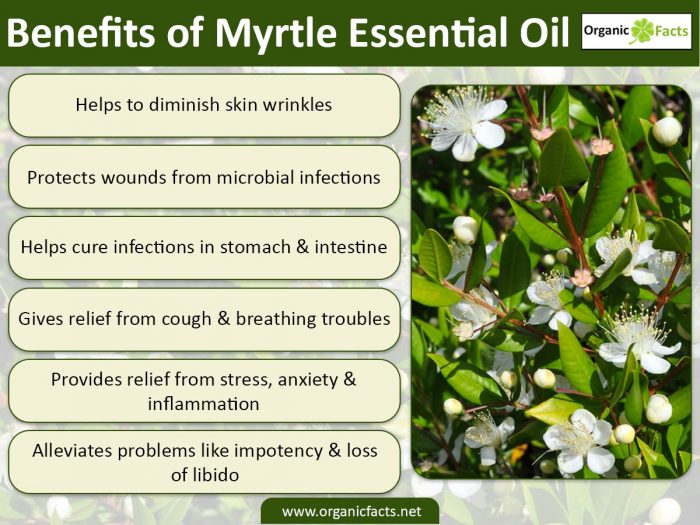
If used in mouthwash, myrtle essential oil makes the gums contract and strengthen their hold on the teeth. If ingested, it also makes the intestinal tracts and muscles contract. Furthermore, it contracts and tightens the skin and helps to diminish wrinkles. It can also help stop hemorrhaging by inducing the blood vessels to contract.
Eliminates Bad Odor
Myrtle essential oil eliminates foul odors. It can be used in incense sticks and burners, fumigants, and vaporizers as room fresheners. It can also be used as a body deodorant or perfume. It has no side effects like itching, irritation or patches on the skin like certain commercial deodorants.
Prevents Infections
This property makes myrtle essential oil a suitable substance to apply on wounds. It does not let microbes infect the wounds and thereby protects against sepsis.
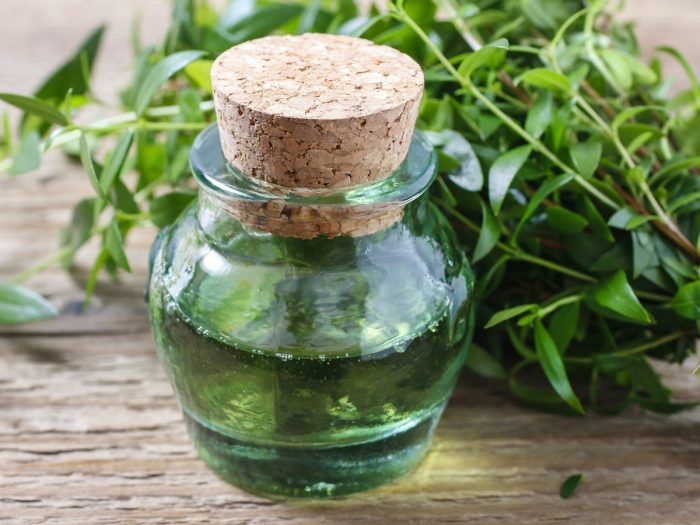
Myrtle essential oil supports the respiratory system as well as healthy hair and skin. Photo Credit: Shutterstock
Expectorant
This property of myrtle oil reduces the presence and further deposition of phlegm. It also clears congestion of the nasal tracts, bronchi, and lungs resulting from colds and provides good relief from coughing.
Maintains Healthy Nerves
It maintains the stability of the nerves and keeps you from becoming nervous or unnecessarily stressed over small issues. It is a beneficial agent against nervous and neurotic disorders, shaking limbs, fear, vertigo, anxiety, and stress.
Relaxes the Body
The essential oil of myrtle relaxes and sedates. This property also provides relief from tension, stress, annoyance, anger, and distress, as well as from inflammation, irritation, and various allergies. [1]
Myrtle essential oil works great as a diffuser. Photo Credit: Shutterstock
Aphrodisiac
Perhaps this is why myrtle essential oil was associated with Aphrodite, the Greek goddess of love. It works very well to alleviate problems like impotency, frigidity, erectile dysfunctions, and loss of libido.
Eases Breathing
This property of myrtle essential oil counters the accumulation of phlegm and catarrh in the respiratory tracts. This property also curbs the formation of mucus and provides relief from coughs and breathing trouble. [2]
Fights Infections
Myrtle essential oil inhibits infections since it is a bactericidal, germicidal, fungicidal, and antiviral substance. It also helps to reduce infections in the stomach and intestines, while helping to stop diarrhea. [3]
Other Benefits
It can be used for skincare and against hemorrhoids, acne, pimples, cystitis, infections in the urinary tract, and chronic problems like leucorrhea. [4]
Finally, it is effective against chest infections in both babies and the elderly.
Words of Caution: There is no inherent risk in using myrtle essential oil, but as always, pay attention to your body’s reaction to any new substance or supplement, and consult a doctor if anything unusual occurs.
Blending: Myrtle essential oil blends well with a wide range of essential oils such as Atlas, Benzoin, Bergamot, Elemi, Eucalyptus, Black Pepper, Cedar Wood, Frankincense, Myrrh, Neroli, Rose, Ho Wood, Hyssop, Jasmine, Lavender, Lemon, Lemongrass, Clary Sage, Coriander, Melissa, Rosewood, and Ylang-Ylang Oils.