It is a no-brainer for culinary artists to not have a bottle of olive oil in their kitchen. The reason being, olive oil makes everything taste so much better and healthier!
There is a wide array of health benefits of olive oil like treatment of diabetes, heart problems, arthritis, and high cholesterol. It may also include weight loss management, metabolism improvement, easy digestion, and aging prevention. It is a staple ingredient for many culinary preparations and also serves a variety of medicinal purposes.
What is Olive Oil?
Olive oil is an essential fruit oil, which we get from the olive tree crop found mainly in the Mediterranean regions. It has been used by mankind for many centuries. It is utilized for cooking purposes, developing cosmetic products and soaps, for medicinal purposes, and as pharmaceutical supplements. It can also be used as fuel and for lighting lamps.
Types of Olive Oil
Various types of oil include the following:
- Virgin Olive Oil: This variety is used for cooking with lower acid content.
- Extra Virgin Olive Oil: This is a much better variety and is made by cold pressing the olive fruit. It contains higher amounts of polyphenols because it is the least processed of the varieties.
- Pure Olive Oil: This type is a combination of refined and virgin oils. It contains a higher acidic content.
- Light Olive Oil: This type has close to little flavor making it a great option for those not wanting a heavy olive oil taste.
- Lampante Oil: It is used as a fuel and is not recommended for cooking purposes.
| Serving Size : | |
|---|---|
| Nutrient | Value |
| Energy | 884 |
| Energy [kJ] | 3699 |
| Total lipid (fat) [g] | 100 |
| Calcium, Ca [mg] | 1 |
| Iron, Fe [mg] | 0.56 |
| Potassium, K [mg] | 1 |
| Sodium, Na [mg] | 2 |
| Choline, total [mg] | 0.3 |
| Betaine [mg] | 0.1 |
| Vitamin E (alpha-tocopherol) [mg] | 14.35 |
| Tocopherol, beta [mg] | 0.11 |
| Tocopherol, gamma [mg] | 0.83 |
| Vitamin K (phylloquinone) [µg] | 60.2 |
| Fatty acids, total saturated [g] | 13.81 |
| 16:0 [g] | 11.29 |
| 17:0 [g] | 0.02 |
| 18:0 [g] | 1.95 |
| 20:0 [g] | 0.41 |
| 22:0 [g] | 0.13 |
| Fatty acids, total monounsaturated [g] | 72.96 |
| 16:1 [g] | 1.26 |
| 17:1 [g] | 0.13 |
| 18:1 [g] | 71.27 |
| 20:1 [g] | 0.31 |
| Fatty acids, total polyunsaturated [g] | 10.52 |
| 18:2 [g] | 9.76 |
| 18:3 [g] | 0.76 |
| Phytosterols [mg] | 221 |
| Sources include : USDA [1] | |
Olive Oil Nutrition
Rich in antioxidants, vitamin K, and vitamin E, olive oil boasts a good nutritional profile. It has a higher concentration of mono-saturated fat like oleic acid and palmitoleic acid, which constitutes 10g of the total fatty acid count of 14g in this oil. Olive oil is high in antioxidants tocopherols, lutein and beta-carotene to name a few and 1 tbsp contains around 1.6 mg or 8% of the RDA for Vitamin E. [2]
As per the USDA, the oil is also free of carbohydrates and cholesterol. The calorie count of this oil is similar to canola oil or butter, at around 120 calories in 1 tbsp of olive oil. Although there are other food sources that yield a higher amount of Vitamin E such as sunflower, almonds, and safflower, olive oil is commonly used in many dishes (primarily Mediterranean cuisine) and has benefits that are significant to total health and wellbeing. [3]
Health Benefits of Olive Oil
Olive oil has numerous beneficial qualities. Some of them are as follows:
May Lower Cholesterol
A collaborative study conducted by the Harvard School of Public Health [4] and many other universities recommends olive oil for lowering cholestrol.
LDL cholesterol is a bad type of cholesterol, which can increase the risk of heart attacks. Extra virgin olive oil, which is rich in almost 40 antioxidant chemicals, may help reduce the oxidation effects of LDL cholesterol. It also helps increase HDL cholesterol levels.
May Help Manage Diabetes
In a cohort study published in the journal Nutrition and Diabetes in 2017, it showed that olive oil can help in preventing and managing diabetes when included in the daily diet. [5]
May Aid in Weight Loss
Medical experts suggest that it is very difficult to gain weight from the mono-unsaturated fats present in olive oil. Research on the Mediterranean oil has shown positive results with regards to using it for weight loss as it contains healthy fats and is a great alternative for butter and other oils loaded with calories. Olive oil can increase the breakdown of food after a meal and may help reduce food intake by making you feel fuller with smaller portions. When combined with other vegetables or legumes in dishes, olive oil can have positive effects on the digestive system which can directly impact weight regulation. [6] [7]
May Prevent Inflammation
Olive oil is rich in polyphenols that have potentially anti-inflammatory and antimicrobial properties. As a result, its use helps inhibit the growth of pathogenic bacteria and relieve inflammation. [8]
May Improve Digestion
Olive oil is known to aid in the digestive process. It may be used as a medicinal oil to clean the digestive tract and improve bowel movements.
May Delay Aging
Rich in antioxidants, olive oil can slow the natural aging process of the human body. The monounsaturated fats found in olive oil help cells maintain their integrity. Used in cosmetic products and natural herbal therapy, it can do wonders for the skin by giving it a natural shine.
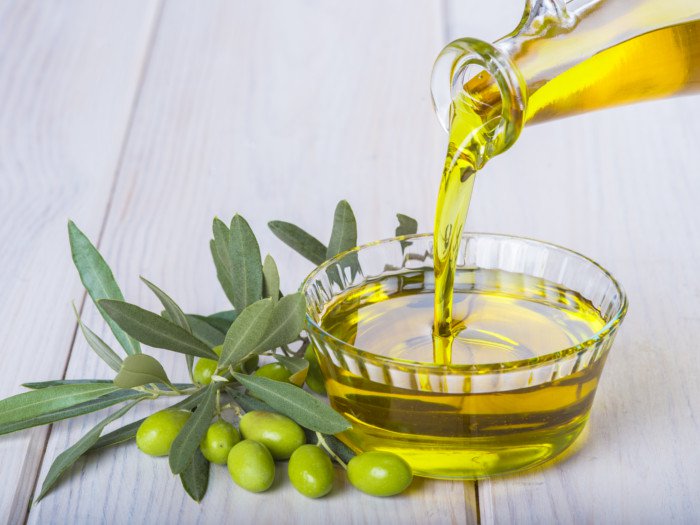
Extra virgin olive oil is made by crushing olives and extracting the juice. Photo Credit: Shutterstock
May Prevent Gallstones
The use of olive oil is also effective in preventing gallstones as it has a laxative effect. It is often used by people practicing gallbladder cleanse.
May Strengthen Cell Walls
As per a 2018 study published in the Internation Journal of Molecular Sciences [9], olive oil may contain polyphenols which help in building stronger cell walls. It may also increase the elasticity of arterial walls, protecting you against various heart conditions.
May Lower Hypertension
A recent research study suggests that a Mediterranean diet comprising of food potentially rich in unsaturated fats (found in olive oil and nuts), nitrite, and nitrate (found in leafy green vegetables) may help protect you from hypertension. [10] [11]
There are several grades of the oil, according to the flavor, aroma, acidic value, and color. Readers are advised to buy authentic oil with proper evaluation for cooking or medicinal purposes.
Other Benefits
The oil boosts the metabolism, the growth of good bone structure, and brain development in children. It can also be an excellent source of vitamin E, which is very beneficial for older people. Studies have shown that an increased intake of vitamin E can lower the risk of developing cataracts and vision loss related to age.
Grades of Olive Oil
When you go to the market, you find different types of olive oils. What does extra virgin mean? What does US Fancy mean? There are two main types of gradations that you will find, IOOC standards and US standards. Fatty acid content plays an important role in determining olive oil classification. Free fatty acid measurements reflect the quality of the oil. The results are described as grams of oleic acid per 100 grams of olive oil. [12]
IOOC Standards
The International Olive Oil Council (IOOC) has released the Trade Standard Applying to Olive Oils and Olive-Pomace Oils. The council has provided descriptions for different types of oils; with the fatty acid in each expressed as oleic acid. Some of these descriptions are given below: [13]
Virgin Olive Oil: It is prepared by mechanical and physical means. There is no alteration to the oil after processing. Edible virgin oil has a free fatty acid content of not more than 2 grams per 100 grams. No food additives are permitted in this oil.
Extra Virgin Olive Oil: This is a type of edible oil, which has a free acidity content of no more than 0.8 grams per 100 grams. No additives are permitted in this oil.
Lampante Virgin Olive Oil: This oil is not fit for human consumption. It has a free fatty acid content of more than 3.3 grams per 100 grams. It is used for refining and technical purposes.
Refined Olive Oil: It is flavorless and without fragrance and the refined form of virgin olive oil. It has a free acidity content of not more than 0.3 grams per 100 grams.
Olive Oil: This is a blend of refined and edible virgin olive oil. It has a fatty acid content of not more than 1 gram per 100 grams.
US Standards
The United States Department of Agriculture (USDA) released the United States Standards for Grades of it in 1948. These standards are still followed in the US and this has, to some extent, caused problems for consumers in purchasing the right kind of oil. [14] [15]
The USDA grades olive oil in the following four categories:
- US Grade A or US Fancy
- US Grade B or US Choice
- US Grade C or US Standard
- US Grade D or Substandard
- Fancy: US Fancy refers to the oil that has a fatty acid content of no more than 1.4 percent (27-30 points). It should be entirely free from any defects (27-30 points). It should have a good typical olive oil odor (18-20 points). It should have a good typical flavor (18-20 points). Finally, it should have a total score of no less than 90 points.
- Choice: US Choice refers to the oil that has a fatty acid content of more than 1.4 percent but not more than 2.5 percent (24-26 points). It should be reasonably free from any defect (24-26 points). It should have a reasonably typical odor (16-17 points) and a reasonably good flavor (16-17 points). It should have a score of no less than 80 points.
- Standard: US Standard refers to olive oil that has a fatty acid content of more than 2.5 percent but less than 3.0 percent (21-23 points). It should be fairly free from any defect (21-23 points). It should have a fairly good typical odor (14-15 points). It should have a fairly good typical flavor (14-15 points). It should have a score of no less than 70 points.
- Substandard: Substandard quality refers to olive oil that has free fatty acid content of more than 3.0 percent (0-20 points). It has more defects than what is present in the US Standard type of oil (0-20 points). It fails to have even a fairly good typical oil odor (0-13 points). It fails to have a fairly good typical olive oil flavor (0-13 points) and scores less than 70 total points.
With abundant health benefits, olive oil is a sure showstopper in the cooking oil arena as it is packed with nutrients and helps you stay healthy and fit.