There has always been a quest among dedicated housewives for the perfect cooking oil, particularly one which is healthy, stable, does not go rancid and at the same time, will be light on the wallet. However, people in the coastal areas of Asia, particularly in Southern India and the Philippines, have had the answer to this dilemma for hundreds of years. For centuries, they have been using coconut oil in cooking and have been reaping its many benefits. Using it also has no adverse effects or negative impacts on the lives, wallets, or health of its users.
We have a common notion that coconut oil is used only for hair care or skin care and that it is not cooking oil. However, you will be surprised to know that this oil is extensively used in cooking in coastal tropical regions, where coconuts are grown in abundance.
It was back in the sixties and seventies when some researchers tried to prove that saturated fats were dangerous and dreadful and should be avoided as much as possible. This made some people turn away from coconut oil, but now, the usage of coconut oil is gaining popularity once again as cooking oil. Let’s explore some of the reasons why this change has occurred.
Why is Coconut Oil So Special?
Recent research has shown that not all saturated fats are bad for your health; coconut oil is one of them. Some saturated fats may increase the level of cholesterol in the blood, but even if they do, this cholesterol is not always necessarily the “bad” cholesterol.
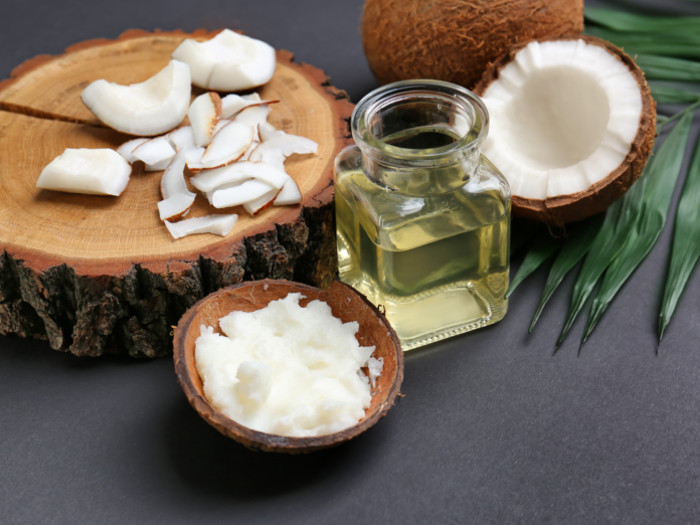
Coconut oil imparts a nutty flavor to dishes. Photo Credit: Shutterstock
Let me explain this in more detail. There are two types of cholesterol, namely, High-Density Lipoproteins (Good Cholesterol) and Low-Density Lipoproteins (Bad Cholesterol). While the Bad Cholesterol (LDL) gets deposited in the inner walls of arteries and poses a threat for your heart (in extreme cases, it can result in heart attacks), the Good Cholesterol (HDL) does just the opposite. It helps lower the level of Bad Cholesterol, provides energy and nutrition to cells and benefits the body in a number of other ways as well.
You will be delighted to know that coconut oil has some saturated fatty acids like Capric Acid and Lauric Acid, which raise the level of High-Density Lipoproteins in the body, lowers Bad Cholesterol, boosts immunity and fights aging. They also increase the rate of metabolism and help shed weight. Isn’t it amazing? Oil that actually helps you lose weight!
It is important to remember that our bodies react differently to different food items. For some people, the cholesterol levels may increase after the consumption of coconut oil. Therefore, if you are planning to start using coconut oil in order to lose weight, check your cholesterol levels regularly. As per the USDA, coconut oil contains 0 cholesterol. [1]
Apart from the health aspects, there is another important impact of coconut oil – Taste! And there is good news here as well! The sweet, earthy, yet refreshing scent of coconut oil and its fabulous taste makes it an ideal cooking medium. You can use it for shallow or deep frying and enjoy the fabulous aroma as you cook. In southern India and other coastal regions, coconut oil is used for cooking both vegetarian and non-vegetarian recipes.
- Edible Coconut Oil: Coconut oil is used across many industries; hair and skin care are just some of them. It is very important to remember that edible coconut oil is different from the oil used for skin and hair, so it should be bought carefully. Edible coconut oils are available in different types, namely refined grade and unrefined grade. You may choose any of these for day to day cooking.
- Easy Storage and Longer Shelf Life: Coconut oil that is solid at room temperature can be stored safely and easily for a long time. This is due to the lack of polyunsaturated fats in coconut oil which helps create a much slower rate of rancidification. Rancidification results into bad taste and makes the oil unsuitable for use. This process is faster if the food item contains unsaturated oils.
- Cost Effective: Finally, the financial aspect! The regular, pure, edible grade coconut oil (generally it is refined, bleached and deodorized) is not very costly, at least when compared to olive oil. Also, since it is very dense and stable, cooking with coconut oil requires less oil, which saves you even more money.
What is Coconut Butter?
Coconut butter is a butter-like paste made from the flesh of coconuts. When you grind dry whole coconuts, without the outer shell, with some water or coconut water, you can get coconut butter. It is quite similar to peanut butter in appearance. Coconut butter is not just another name for coconut oil and is actually very different from coconut oil. Coconut oil is the oil extracted by pressing coconuts, it does not contain the flesh of the coconut, while coconut butter will have both the flesh and the oil in it, since the oil has not been removed from the coconut.
Normally, coconut butter is for edible purposes. Very few people use it for topical use. Coconut butter is either used as a spread on various bread or it can also be used in several popular recipes. Coconut butter is delicious, so those who do not like the taste of coconut oil, yet want to enjoy its benefits, should consume coconut butter when possible.
Making coconut butter at home is quite easy. Take a whole, dry coconut. Shred it and put it in a food processor. You can also buy the shredded coconut from the market. You then add some water or coconut water, but some people also use milk. After 10-20 minutes, depending on your blender speed, you will get a smooth paste of coconut butter. This Coconut butter will not be as smooth as regular butter and it has some granularity, but considering the amazing taste and the health benefits of that type of butter, the slightly gritty quality probably won’t bother you too much.
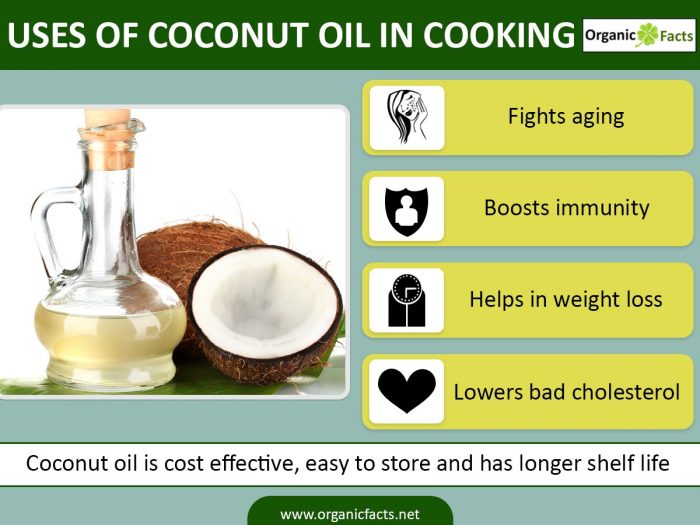
Coconut oil is best for baking and sautéing. Photo Credit: Shutterstock
Some Coconut Oil Recipes
There are some simple recipes that can be cooked using coconut oil. You can also add coconut oil in the preparation of sweets and desserts.
Egg Omelet
Ingredients: 2 eggs beaten, 1 chopped onion, 1 chopped tomato, salt to taste, pepper to taste, and coconut oil for cooking.
- Take the beaten eggs in a bowl and add the onion, tomato and other spices. Mix well.
- Heat a pan and add 1 tbsp of coconut oil.
- Once hot, add the egg mixture and cook both the sides until done.
- Serve hot with toasted bread, salad, and ketchup.
Fish Fry
Ingredients: 2 medium size clean cut fish of your choice, salt and pepper to taste, 2 tsp lime juice, turmeric powder to taste, and coconut oil for shallow frying.
- Take the cut fish in a bowl and add salt, pepper, lime juice, and turmeric powder.
- Keep the marinade aside for 20 minutes.
- Later, shallow fry the fish in the coconut oil. One can also coat the fish in egg white/semolina for a crispy taste before shallow frying.
- Serve hot as a snack or a side dish.
Note: you may add ginger, garlic paste, and red chili powder into the marinade for a spicier taste.
Indian Vegetable Curry
Ingredients: 250 gm of cut vegetables- potato, beans, peas, cauliflower, 2 chopped onion, 2 chopped tomato, cumin seeds, grated coconut – 2 tbsp, salt and pepper to taste, and coconut oil for cooking.
- Heat a pan, add coconut oil, cumin seeds, and onion and fry till golden.
- Add tomato and cook until they soften.
- Add the vegetables and spices.
- Add some water to the pan. You can either make dry or semi-dry gravy.
- Cover and cook until the vegetables are cooked.
- Garnish with grated coconut.
- Serve hot with Indian bread- roti, puri or rice.
Coconut oil has a strong aroma and taste which you may not be familiar with, so some users may not appreciate the taste and flavor of the food cooked in coconut oil.
Fed up with my lectures? Want to try some coconut oil in cooking instead? Understandable! Go ahead and have a nice time munching on this delicious food item and incorporate it into your diet and cooking repertoire!