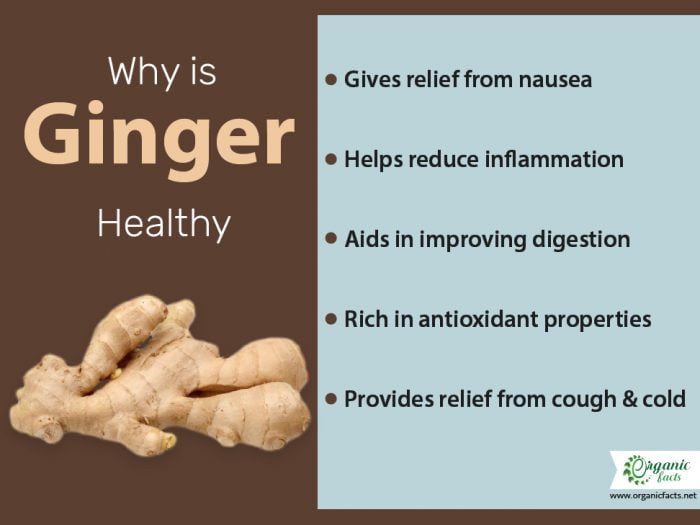
Ginger is a spice with potential anti-inflammatory properties. The top health benefits of ginger may include its ability to help relieve nausea and pain, improve respiratory conditions, and reduce flatulence. Ginger also helps boost bone health, strengthen the immune system, and increase appetite. This spicy root is also good for mitigating obesity and relieving the pain related to menstrual disorders.
What is Ginger?
Ginger, also known as Zingiber officinale, is a flowering plant, whose root or rhizome is used as a spice. It can be consumed in many forms, fresh, dried, powdered, and in the form of oil and juice. Ginger is a common ingredient in Asian cuisines where it is used to build flavors in curries, dressings, and soups. It is also used in sweets and alcoholic beverages such as ginger cookies, ginger beer, and wine. [1]
Today, ginger is on the FDA’s list of generally safe foods and is often used to mask the taste of bitter medicines such as cough syrups.
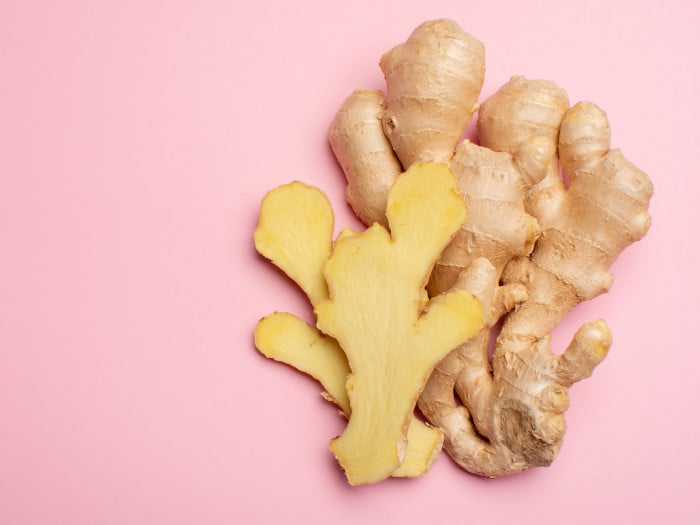
Ginger roots can be used to make a healing cup of tea. Photo Credit: Shutterstock
Serving Size : Nutrient Value Water [g] 78.89 Energy 80 Energy [kJ] 333 Protein [g] 1.82 Total lipid (fat) [g] 0.75 Ash [g] 0.77 Carbohydrate, by difference [g] 17.77 Fiber, total dietary [g] 2 Sugars, total including NLEA [g] 1.7 Calcium, Ca [mg] 16 Iron, Fe [mg] 0.6 Magnesium, Mg [mg] 43 Phosphorus, P [mg] 34 Potassium, K [mg] 415 Sodium, Na [mg] 13 Zinc, Zn [mg] 0.34 Copper, Cu [mg] 0.23 Manganese, Mn [mg] 0.23 Selenium, Se [µg] 0.7 Vitamin C, total ascorbic acid [mg] 5 Thiamin [mg] 0.03 Riboflavin [mg] 0.03 Niacin [mg] 0.75 Pantothenic acid [mg] 0.2 Vitamin B-6 [mg] 0.16 Folate, total [µg] 11 Folate, food [µg] 11 Folate, DFE [µg] 11 Choline, total [mg] 28.8 Vitamin E (alpha-tocopherol) [mg] 0.26 Vitamin K (phylloquinone) [µg] 0.1 Fatty acids, total saturated [g] 0.2 8:0 [g] 0.01 12:0 [g] 0.04 14:0 [g] 0.02 16:0 [g] 0.12 18:0 [g] 0.02 Fatty acids, total monounsaturated [g] 0.15 16:1 [g] 0.02 18:1 [g] 0.12 20:1 [g] 0.01 Fatty acids, total polyunsaturated [g] 0.15 18:2 [g] 0.12 18:3 [g] 0.03 Phytosterols [mg] 15 Tryptophan [g] 0.01 Threonine [g] 0.04 Isoleucine [g] 0.05 Leucine [g] 0.07 Lysine [g] 0.06 Methionine [g] 0.01 Cystine [g] 0.01 Phenylalanine [g] 0.05 Tyrosine [g] 0.02 Valine [g] 0.07 Arginine [g] 0.04 Histidine [g] 0.03 Alanine [g] 0.03 Aspartic acid [g] 0.21 Glutamic acid [g] 0.16 Glycine [g] 0.04 Proline [g] 0.04 Serine [g] 0.05 Sources include : USDA [2]
Ginger Nutrition
Most of the benefits derived from ginger are because of the presence of an active constituent called gingerol. According to the USDA FoodData Central, it is also rich in carbohydrates, dietary fiber, and protein. In terms of minerals, it has sodium, iron, potassium, magnesium, phosphorus, and zinc. its vitamins include vitamin C, folate, vitamin B6, riboflavin, and niacin. [3] [4]
There are many anti-inflammatory and antioxidant compounds like pantothenic acid, beta-carotene, capsaicin, curcumin, caffeic acid, and salicylate in it. Also, the presence of active compounds like shogaol, zerumbone, terpenoids, flavonoids, paradol, and zingerone in ginger provides many health benefits. [5]
Health Benefits of Ginger
While the traditional uses of ginger for better health are numerous, today we can easily add to it the multiple beneficial properties discovered and confirmed by research. Let’s take a look at some of the most popular health benefits of ginger.
May Relieve Nausea
The consumption of fresh ginger has been shown to be effective in alleviating various forms of nausea, including morning sickness, motion sickness, and chemotherapy side effects. This may be due to its ability to increase gastric motility and block serotonin receptors in the gut lining, which can help to silence the nerves that trigger the vomiting reflex. [6]
Although a study published in Nutrition Journal reveals that ginger may help in relieving nausea during pregnancy, but was not seen to be as effective in treating problems of vomiting. Significantly, it did not show any side effects, an important factor when treating pregnant women.
Ginger is not recommended for use during pregnancy, especially for people close to labor, with a history of pregnancy loss or vaginal bleeding, or with clotting disorders. [7]
Its quick absorption and rapid regulation of body functions cure nausea in people who have undergone surgeries, without any side effects.
Ginger is a common ingredient in Asian cuisines where it is used to build flavors in curries, dressings, and soups.
May Aid in Weight Loss
Ginger can potentially aid in weight loss through various mechanisms. It’s known to boost metabolism, suppress appetite, regulate blood sugar, and reduce inflammation, all of which are relevant factors in weight management.
: [9]
- Reduce inflammation: Inflammation is a major contributor to obesity and weight gain. Ginger compounds such as 6-shogaol, zingerone, and 8-shogaol have been shown to decrease inflammation and improve symptoms in both human and animal models. [10]
- Boost metabolism: Ginger has been shown to boost metabolism in animals. A recent study found that ginger supplementation increased energy expenditure and fat burning in rats. [11] [12]
- Reduce appetite: A study found that ginger supplementation reduced hunger and increased fullness in people with overweight or obesity. [13]
It is important to note that the research on the effects of ginger on weight loss is still in its early stages. More research is needed to confirm the long-term safety and efficacy of ginger supplementation for weight loss.
May Treat Cold and Flu
This is traditionally used in many Asian countries against cold and flu. A study published in the Journal of Ethnopharmacology found that fresh ginger shows potential antiviral properties against respiratory tract infections. It can be used in the form of tea for providing relief to sore throat and coughing. [14] [15]
May Aid in Digestion
Ginger finds a prominent mention in Chinese medicine as a facilitator of the digestive process. While many of its benefits are established part of traditional medicinal history, a review published in 2019 in the journal Food, Science & Nutrition asked for more human studies to understand effective dosage. The study, however, agreed that there was substantial anecdotal evidence, backed by clinical trials. [16]
It is also frequently used as an appetizer or an aperitif since it can stimulate the appetite while preparing the digestive system for an influx of food. It works well as a carminative, thus helping with flatulence. [17]
May Be Remedial for Stomach Ulcers
Ginger may prevent the occurrence of ulcers, which are generally characterized by bleeding and acute gastric irritability. It has anti-inflammatory and antibacterial properties that can help to reduce inflammation and kill the bacteria that cause ulcers. [18] [19]
According to a study published in 2016 in the World Journal of Gastrointestinal Pharmacology and Therapeutics, it is very effective in inhibiting the growth of H. pylori bacteria, which is ulcerogenic, thus keeping your stomach healthy. [20]
May Reduce Arthritis Pain
Ginger is known to boost bone health and relieve joint pain associated with arthritis. It may contain gingerol, which has powerful anti-inflammatory properties. It can improve movement in osteoarthritis, knee inflammation, and rheumatoid arthritis, as cited in a study published in Arthritis & Rheumatism journal. Along with that, it also suppresses the inflammatory compounds like cytokines and chemokines at the source before they begin to affect the body. [21] [22] [23] [24]
If you are considering using ginger to treat osteoarthritis, it is important to talk to your doctor first. Ginger can interact with certain medications, and it is not suitable for everyone.
May Relieve Asthma
Ginger has been used traditionally as a potential medicine to treat respiratory disorders. A study conducted in 2015 also seconded its potential anti-inflammatory properties. Zerumbone, an active compound, may help relieve asthma. Research shows that allergic airway inflammation is majorly caused by Th2 dominance and the spicy root is successfully able to suppress it. [25] [26]
Recent animal studies have shown ginger’s active components, gingerol, and shogaol may have the potential as a therapeutic option for asthma. More research is needed to confirm the safety and efficacy of ginger for the treatment of asthma in humans. [27] [28]
May Aid in Liver Protection
People suffering from tuberculosis can benefit from ginger, as it helps prevent hepatotoxicity. Animal studies show that it also protects against the liver-damaging cadmium poisoning caused due to the significant ingestion of cadmium. Its essential oil exerts a protective effect against the non-alcoholic fatty liver disease occurring because of obesity. [29] [30] [31]
May Relieve Muscle Pain
Ginger is well-known for reducing muscle pain and soreness caused due to exercising. The potentially anti-inflammatory properties of this root are to be credited for this benefit. The study points out that ‘daily consumption of raw and heat-treated ginger resulted in moderate-to-large reductions in muscle pain following exercise-induced muscle injury.’ [32] [33] [34]
May Help Manage Dysmenorrhea
Ginger may help reduce the levels of prostaglandins in the body, hence it aids in relieving cramps and other forms of discomfort and pain during menstruation. Scientists believe that high levels of prostaglandins contribute to increased menstrual cramps. These hormones function as chemical messengers are the key activators of symptoms such as cramps, pains, and fevers. According to a report published in ISRN Obstetrics and Gynecology, it can also help to reduce the severity of mood and behavior during PMS. [35] [36] [37]
Might Boost Heart Health
Ginger may protect cardiovascular health by lowering LDL cholesterol levels and increasing HDL cholesterol levels. [38] [39]
A meta-analysis of 26 randomized controlled trials showed that ginger consumption could significantly improve total triglyceride, cholesterol, LDL, and HDL levels. The most effective dose was >1500 mg/d for more than 8 weeks. It may also reduce the risk of blood clotting, thereby helping regulate hypertension and keeping your heart healthy. [40] [41]
May Control Diabetes
Ginger may help regulate the blood sugar levels in people suffering from type 2 diabetes. Glycemic and lipid abnormalities lead to long-term complications in diabetics, as per a research study published in the International Journal of Endocrinology Metabolism in 2017. Therefore, to improve your insulin resistance and control diabetes, consider adding this root to your diet. Another study published in the journal Complementary Therapies in Medicine in 2014 demonstrated “daily consumption of 3 one-gram capsules of ginger powder for 8 weeks is useful for patients with type 2 diabetes.” [42] [43]
May Improve Dental Health
Ginger is known to inhibit bacterial, viral, and fungal infections, owing to the presence of gingerol in it. It may also help in maintaining oral health by killing the pathogens in the mouth and keeping the teeth and gums intact. Its potential antibacterial properties may help ward off pathogenic bacteria that cause urinary tract infections (UTI), bronchitis. [44]
May Alleviate Diarrhea
It has been used since ancient times to help with diarrhea since it may prevent stomach spasms and gas that contribute to and stimulate it. In China, the powdered form is given to those with diarrhea and this traditional practice is followed for thousands of years; scientists have concluded that these ancient treatments are indeed beneficial for this condition. [45]
May Increase Sexual Activity
A known potential aphrodisiac, ginger was used in many cultures to arouse desire and enhance sexual activity. The book Ginger: A Versatile Healing Herb mentions the use of Ayurveda as an aphrodisiac. Its scent has a unique allure that helps in increasing fertility and establishing a sexual connection. This root also helps increase blood circulation. [46] [47]
Uses of Ginger
- Fresh raw ginger root is a staple ingredient in Asian cuisines. It is used in curries, soups, rice, noodles, and stews.
- Pickled ginger is offered with sushi as a palate cleanser. Ginger-garlic paste is used across cuisines.
- World over, it is also used to flavor beverages such as tea, specialty coffees, lemonades, cocktails, and even smoothies.
- Ginger cookies, candied ginger, and the gingerbread man are popular holiday favorites.
- Ginger Tea – You can make tea by steeping grated ginger in boiled water. It is a natural cure for sore throat, coughs, and colds.
- Ginger juice and chews are other home remedies, often given to alleviate nausea and digestive problems.
- It is often used in herbal products such as soaps, shampoos, massage oils, and perfumes.
Ginger supplements are available in most pharmacies in the form of:
- Dried ginger root
- Capsules
- Extracts
- Syrups
- Powder form
- Essential oils
How to Buy & Store Ginger?
Select a root that is wrinkle-free or has minimal wrinkles and taut skin. Make sure the skin is not thick and bruised. The best way to check is by scraping it with your nail. The aroma of the fresh root is peppery, sharp, and strong, so inhale the fragrance and enjoy shopping!
It can be stored in a plastic bag in the refrigerator. However, you should peel, cut, or grate it only before using it. If you want to store a cut piece of the root, dry it first so that it doesn’t rot away.
Side Effects
The commonly observed side effects are as follows:
- Diarrhea
- Heartburn
- Stomach upset
- Hives
- Swelling
- Breathing issues
Risks
- Acid-reflux: It may worsen acid reflux in some people.
- Gallstones: It can increase bile production, which may cause the stone to create a block in bile flow. The National Centre for Complementary and Integrative Health recommends that people with gallstone disease exercise caution when using ginger as it can increase the flow of bile. [48]
- Blood-thinning: It should not be eaten with blood-thinning medicines or aspirin as it may affect blood clots.
- Pregnant women: Though it is generally considered safe, women with a history of miscarriage should consult a doctor before making any dietary change. [49]