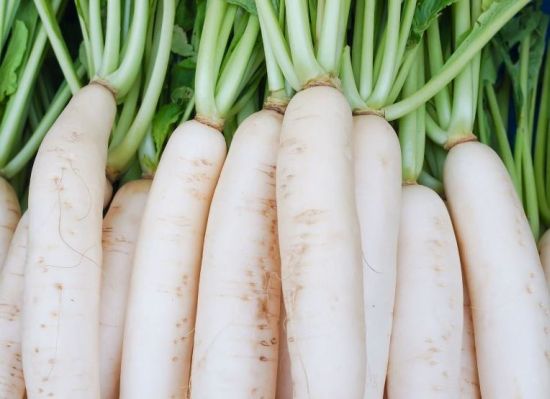
Radishes are a root crop that can be juicy, pungent, or sweet in taste. They also come in a variety of colors, including white, red, purple, or black. In terms of shape, they can be long and cylindrical, or round. Radishes may be eaten raw, cooked, or pickled. The oil obtained from the seeds of radish has a number of beneficial health applications.
What is Radish?
Radish is an edible root vegetable with a pungent taste. The parts of the radish plant that are commonly consumed are the leaves, flowers, pods, and seeds. The scientific name of radish is Raphanus sativus which belongs to the Brassicaceae family. Radishes are also known as daikon in some parts of the world, primarily in Asian markets. [1]
Radish Nutrition
According to the USDA FoodData Central, radish may be rich in various nutrients which include potassium, calcium, sodium, and vitamin C. It might contain vitamins including B-vitamins (thiamin, niacin, riboflavin, folate, and vitamin B6), vitamin A, and vitamin K. Radishes may be mostly composed of water so they can be a great natural agent to keep your body hydrated. Every 100 grams of radish may contain 95.27 grams of water. It might also provide minerals such as iron, magnesium, phosphorus, and zinc. [2]
Carbs in Radish
Radish may also be one of the many low-carbohydrate, non-starchy, vegetables. One cup of sliced radishes will provide around 3.4 grams of carbohydrates, out of which most of it is dietary fiber.
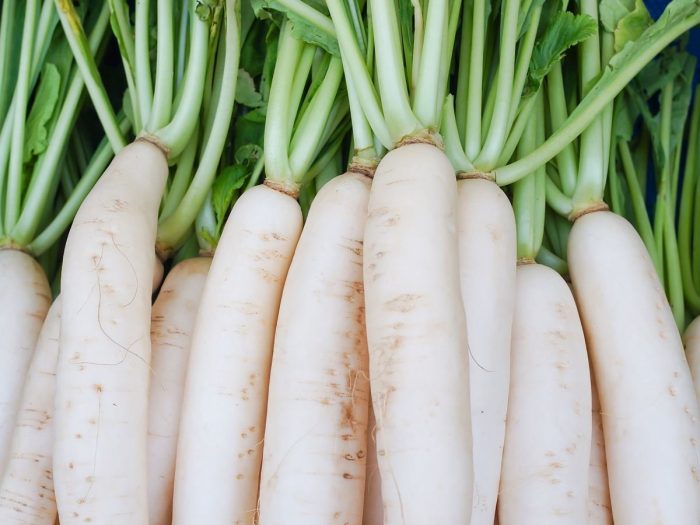
Radish leaves can be used in place of lettuce in salads and burgers. Photo Credit: Shutterstock
Serving Size : Nutrient Value Water [g] 95.27 Energy 16 Energy [kJ] 66 Protein [g] 0.68 Total lipid (fat) [g] 0.1 Ash [g] 0.55 Carbohydrate, by difference [g] 3.4 Fiber, total dietary [g] 1.6 Sugars, total including NLEA [g] 1.86 Sucrose [g] 0.1 Glucose (dextrose) [g] 1.05 Fructose [g] 0.71 Calcium, Ca [mg] 25 Iron, Fe [mg] 0.34 Magnesium, Mg [mg] 10 Phosphorus, P [mg] 20 Potassium, K [mg] 233 Sodium, Na [mg] 39 Zinc, Zn [mg] 0.28 Copper, Cu [mg] 0.05 Manganese, Mn [mg] 0.07 Selenium, Se [µg] 0.6 Fluoride, F [µg] 6 Vitamin C, total ascorbic acid [mg] 14.8 Thiamin [mg] 0.01 Riboflavin [mg] 0.04 Niacin [mg] 0.25 Pantothenic acid [mg] 0.17 Vitamin B-6 [mg] 0.07 Folate, total [µg] 25 Folate, food [µg] 25 Folate, DFE [µg] 25 Choline, total [mg] 6.5 Betaine [mg] 0.1 Carotene, beta [µg] 4 Vitamin A, IU [IU] 7 Lutein + zeaxanthin [µg] 10 Tocotrienol, alpha [mg] 0.02 Vitamin K (phylloquinone) [µg] 1.3 Fatty acids, total saturated [g] 0.03 16:0 [g] 0.03 18:0 [g] 0 Fatty acids, total monounsaturated [g] 0.02 18:1 [g] 0.02 Fatty acids, total polyunsaturated [g] 0.05 18:2 [g] 0.02 18:3 [g] 0.03 Phytosterols [mg] 7 Tryptophan [g] 0.01 Threonine [g] 0.02 Isoleucine [g] 0.02 Leucine [g] 0.03 Lysine [g] 0.03 Methionine [g] 0.01 Cystine [g] 0.01 Phenylalanine [g] 0.04 Tyrosine [g] 0.01 Valine [g] 0.04 Arginine [g] 0.04 Histidine [g] 0.01 Alanine [g] 0.03 Aspartic acid [g] 0.06 Glutamic acid [g] 0.16 Glycine [g] 0.03 Proline [g] 0.02 Serine [g] 0.03 Sources include : USDA [3]
Health Benefits of Radish
The benefits of radishes in the treatment or prevention of certain ailments and on certain body parts are listed below:
May Aid In Digestion
Radishes may be rich in fiber which can add considerable bulk (and regularity) to bowel movements that may help relieve the symptoms of constipation. A 2008 study suggests that radish leaves may help in healing gastrointestinal infections and get rid of the symptoms of diarrhea. Furthermore, radishes may also be known to promote the production of bile. Bile is one of the most important parts of good digestion, and also helps to assist both the liver and gallbladder. [4]
May Prevent Piles
Radishes may be considered to have roughage and are composed of indigestible carbohydrates (specifically lignin, a type of insoluble fiber). This may facilitate digestion, water retention, and alleviates constipation, which is one of the major causes of piles also referred to as hemorrhoids. As a good detoxifier, they may help relieve the symptoms of piles very quickly. Radish juice might also soothe the digestive and excretory system, further relieving the symptoms of piles. [5]
May Help With Urinary Disorders
Radishes may be diuretic in nature, which means that they might help increase the production of urine. Radish juice also may help reduce inflammation and relieve the burning sensation during urination. It may also inhibit infections in the kidneys and urinary system, thus helping the treatment of various urinary conditions that are exacerbated by excess toxins in the system. [6]
A 2012 study revealed that radish might have antifungal properties. It may help induce cell death in a common fungus known as Candida albicans, which can cause oral infections and vaginal yeast infections. [7]
May Help In Weight Loss
Radishes might be very filling, which means that they may satisfy your hunger without running up the calorie count. They may also be low in digestible carbohydrates, high in roughage (insoluble fiber), and contain a large water content. Thus they may prove to be a very good dietary option for those who are determined to lose weight. Furthermore, they are high in fiber and low on the glycemic index (GI), which means that they can help regulate bowel movements, thereby helping in weight loss and increasing the efficiency of metabolism. [8]
May Improve Cardiovascular Health
Radishes may also be a great source of anthocyanins, a flavonoid, which not only give color to radishes but also provide numerous health benefits. Anthocyanins may have been the subject of numerous medical studies, and have been positively associated with reducing the occurrence of cardiovascular diseases. [9] [10]
May Help Treat Leucoderma (Vitiligo)
The detoxifying and anti-carcinogenic properties of radishes may make their seeds useful in the treatment of leucoderma. You can eat radishes as well to aid in the treatment of leucoderma. [11]
Note: Radish seeds can be powdered and soaked in vinegar, ginger juice, and then applied on the white patches. However, consult a medical professional before trying this.
May Relieve Respiratory Disorders
Radishes are an anti-congestive, meaning that they may decrease congestion of the respiratory system including irritation of the nose, throat, windpipe, and lungs that can come from colds, infections, allergies, and other causes. They might also be a great disinfectant and are rich in vitamins, which further protects the respiratory system. According to a book titled, Pharmacology And Applications Of Chinese Materia Medica (Volume Ii), Volume 2, authored by Paul Pui-hay, the radish might have been traditionally used as a remedy for pulmonary tuberculosis. [12]
Radishes have a strong, natural spice to them, and they are also quite pungent, which is very good for preventing illnesses. They may also eliminate excess mucus in the throat. Furthermore, radishes have been known to soothe sore throats and relieve congestion by clearing the sinuses.
May Lower Blood Pressure
Radishes might be a very good source of potassium, which may contribute to a large list of health benefits. Research by Dr. Haddy, Mayo Clinic, suggests that potassium might help reduce blood pressure. It may also be one of the main components of the very popular and effective DASH diet. When potassium interacts with the arterial supply of vascular beds, it may help relax the blood vessels, and therefore promote blood flow. It might also reduce the blood pressure by widening the flow of the blood, instead of forcing it through narrow, constricted channels. [13] [14]
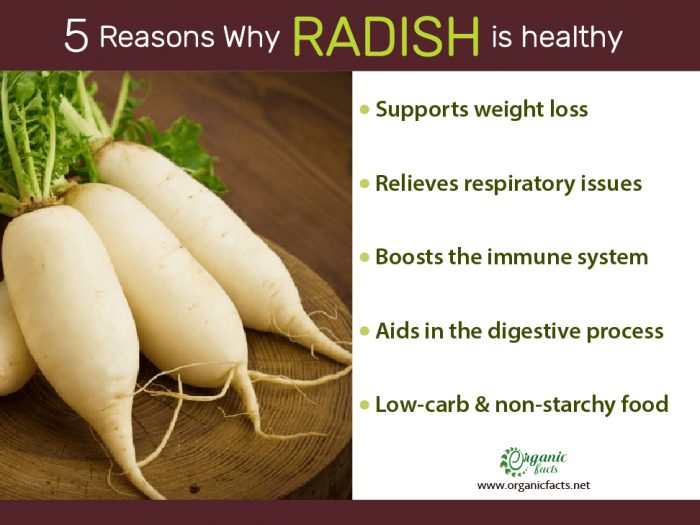
Radishes have a strong, natural spice to them, and they are also quite pungent.
May Manage Diabetes
Radishes have long been known to have a low glycemic index, which means that eating a radish does not significantly impact blood sugar levels. Also, an in vivo study published in the journal Nutrition in 2017 states that drinking radish root juice might have a positive effect on the blood glucose levels of those with diabetes. They may also help regulate the absorption of sugar into the bloodstream, meaning that people with diabetes don’t have to worry as much about sudden spikes or drops when eating or being away from food for a certain amount of time. Given the nature of this study, more research is needed to confirm the efficacy of these results. [15]
May Help In Skin Care
Vitamin C, zinc, and some members of the vitamin-B family, present in radishes might prove to be good for the skin. The high water content in radishes may also help maintain healthy moisture levels and hydration of the skin. Smashed raw radish may also be a good cleanser and might serve as an efficient face mask. Due to its disinfectant properties, radishes may also help clear up skin disorders like dry skin, rashes, and cracks. Due to the presence of niacin, it may also help prevent the skin condition pellagra. [16]
May Reduce Fever
It is considered by some that radishes help lower body temperature and relieve inflammation from fevers. A good method of intake is drinking radish juice mixed with black salt, and since they may act as good disinfectants, radishes also fight infections that can cause fever.
May Protect Kidneys
Radishes are thought to act as a diuretic, cleanser, and disinfectant which may aid in relieving symptoms of kidney ailments. They are low in potassium and phosphorus and may make a great choice for patients on hemodialysis. [17]
May Offer Relief From Insect Bites
Radishes may have antipruritic properties and can be used as an effective treatment for insect bites and bee stings. Radish juice may also reduce pain and swelling and soothe the affected area. [18]
May Protect The Liver & Gallbladder
Radishes may be considered beneficial for liver and gallbladder functions and a few studies have been conducted to determine the effects.
One such study published in 2012 suggests that white radish enzyme extracts may help protect against hepatotoxicity. However, as this was a study conducted using animal subjects, further research is required to confirm the true dose, impact, and efficacy of radishes on liver health. [19]
Black radish juice has been used as a folk remedy by people from Mexico to eliminate gallstones. An animal study published in the Journal of Biomedicine and Biotechnology found that black radish juice may provide relief from cholesterol gallstones and may also reduce triglycerides and increase HDL or good cholesterol levels. [20]
May Help Fight Jaundice
Radish and radish leaves have been used as a home remedy against jaundice, especially in Indian, Greek-Arabic, and Unani branches of medicine. They are believed to be helpful in maintaining stomach and digestive health. [21]
Other Benefits
Apart from the benefits outlined above, radishes may work well as an appetizer, breath freshener, laxative, and metabolism regulator. The intake of radishes may help protect against various health conditions as mentioned above.
Whether it is to improve digestive health, enhance your skin, or just incorporate more vegetables into your diet, you can’t go wrong with nutrient-packed power food radishes!
How to Use Radish In Your Diet?
As seen above, radishes have numerous health benefits, and adding them to your daily diet will not only give you the required nutrition boost but also lend a pungent, peppery, and zesty flavor to many recipes. Feel free to experiment and incorporate radishes in your diet in the most fun and unique way possible. Here are a few recipe ideas that we have for you.
- Baked: You can bake radishes and saute them with garlic, herbs, and cheese to have it as a delicious and healthy dinner option.
- Sandwiches: Thin radish slices can be added to your regular vegetable sandwich.
- Pickled Radishes: Pickled radishes can be used in kimchis, a famous traditional Korean appetizer of salted and fermented vegetables.
- Salads: You can also add the crunchiness of radishes to your green and vegetable salads.
- Tacos & Indian Bread: Radishes can be grated and cooked in a variety of spices. This mixture can then be added as a stuffing in tacos or your regular Indian bread (known as parathas). Note that the spices used for both the dishes will be different from one another.
- Grilled: Round radish slices can be grilled using olive oil, salt, and herbs and served as a side dish with beef/chicken/pork, or fish steak.
- Creamy Yogurt: The peppery flavor of grated or thinly sliced radishes goes very well with creamy yogurt and works well as a delicious dip to be had with fish or chicken. Indians call it raita.
- Healthy Snack: You can also have sliced, roasted watermelon radishes with any dip of your choice as it makes for a great healthy snack. The zinginess of radishes goes brilliantly well with the sour and creamy feta cheese dip.
- Radish Green Salad: Don’t get rid of radish greens as they are nutritious. You can add them with other greens like kale, arugula, spinach to make a green salad. Sprinkle olive oil, vinaigrette sauce, and garnish them with roasted almonds or any other dry fruit of your choice and you have a delicious, healthy, crunchy salad for yourself!