Bookmark and Share RSS
Organic Food FAQs
User Rating: / 11
PoorBest 
Organic Food Basics

What is organic food?
Organic food referes to food items that are prepared according to the norms set by an organic certifying body. On an overall basis, organic food is food prepared and processed without using any chemicals, that is, organic food production does not involve the use of chemical fertilizers, chemical pesticides, chemical preservatives, etc.

The USDA categories food products into:

  • 100% organic: Must contain 100 percent organically produced ingredients.
  • Organic: Must contain at least 95% organic ingredients.
  • Made of organic ingredients: Must contain at least 70% organic ingredients.
  • Have some organic ingredients: May contain less than 70% organic ingredients.

Is organic food good for health?
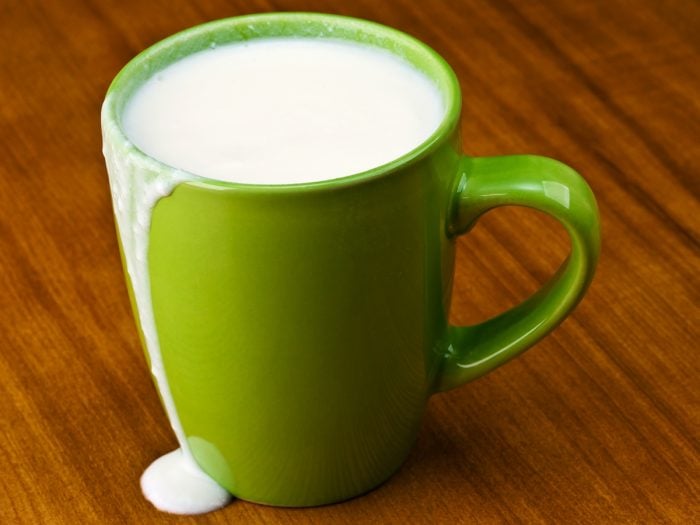
Normally people believe that organic food is better in health than conventional food. However, the USDA and the FDA clearly state that conventional food is as healthy as orgnaic food. Scientific research has also not been able to prove that organic food is healthier than conventional food. The exceptions are organic milk and organic tomatoes. Recent studies on organic milk and organic tomatoes have shown that these food products are healthier than non organic milk and non organic tomatoes respectively.

Does organic food taste better?
No research has shown that organic food tastes better than non organic food. However, people strongly feel that organic food tastes much better than non organic food.

From where can I buy organic food?
Some of the avenues for buying organic food are given below:

  • Directly from an organic farm
  • Local organic food markets
  • Natural and organic food stores
  • Health food stores
  • Retail chains such as Walmart, Whole Foods
  • Conventional stores that also stock organic food

Do companies deliver organic food online?
Yes, there are many companies that provide home deliveries through online shopping.

How do I know if something is organic?
Organic food can be identified with the help of an organic logo on the packet. Companies, farmers, manufacturers and suppliers, which follow all the norms set by a certifying body of their region, can put a logo of that certifying body on their food items.

Are organic food standards same for all food products?
No, since the mode of production and processing is different for different food items, the standards are also different. For example, the standards for organic honey production are different from the standards for organic milk production or organic coconut oil production.

Are organic food standards same in all countries?
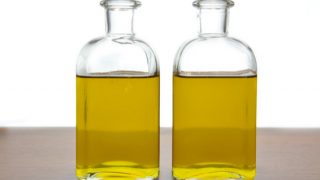
No, organic food standards vary from region to region. Some countries may together follow a unifrom set of codes, example about 18 countries follow the rules set by the International Olive Oil Council, for organic olive oil production. However, there are some countries such as the US, which have their own standards for organic olive oil production.

Should I look for the word Organic on the food item?
Yes, you should look for the word Organic; however, also check the logo of the certifying body.

Can someone sell non organic food claiming that it is organic food?
It is illegal to sell non organic food with an organic label. There have been cases of frauds earlier; which when brought to the notice of authorities, have been dealth with strongly. Hence you should always check the logo of the certifying body properly and should buy organic food items that have an authentic label on them.

Does organic food cost more than conventional food?
Yes, organic food normally costs 20 percent to 100 percent more than non organic food.

Why does organic food cost more?
Organic food production is generally labour intentsive and involves usage of organic fertilizers and organic pesticides which are expensive than chemical fertilizers and pesticides. Hence organic food costs more.

Is organic food same as natural food?
No, organic food refers to food items prepared without using chemicals. Natural food refers to food items that are minimally processed.

Can I produce organic food in my garden?
Yes, you can produce organic food in your garden. Organic gardening is a very common hobby for many people.

Do I need to take permission for producing organic food?
No, you need not take permission to produce organic food. You can produce organic food and eat it without any permission. However, if you intend to sell this organic food, you need to follow the guidelines set by a certifying agency and get an approval from them for using their logo.

Is organic food safe for children?
Many parents believe that organic food is safe for their children as it does not contain any chemical pesticides and fertilizers. However, there is no scientific research to prove this.

Does organic food contain more nutrients?
So far, scientific research has proved this only for organic milk and organic tomatoes. Organic milk has more omega3, CLA, vitamins and antioxidants than non organic milk. Simillarly, organic tomatoes have more antioxidants than non organic tomatoes.

Does organic food production involve animal welfare?
Yes, animal welfare is an important aspect of organic food production. Animals raised through organic means have to be kept in the open for a specified amount of time. There are guidelines for the general care of the animals as well.

Is organic food free of pesticides and fertilizer residues?
Organic food production does not involve usage of chemical fertilizers and pesticides. However, bio pesticides and bio fertilizers can be used for organic food production. Residues of these bio pesticides and bio fertilizers may be present in the organic food.


Bookmark and Share RSS
Discussion Board
Add New RSS
Ask a question or share your views
Sach 2009-08-09 14:36:37
Just a word on this article:

Organically grown tomatoes have more nutrients than "conventionally" grown tomatoes in a way that is a *statistically* significant--not *nutritionally* significant. The amount of nutrients needed to meet the level of *statistical* significance is much less than the amount of nutrients needed to be *nutritionally* significant. So organic tomatoes are no more "healthy" than regular tomatoes.

I have not read about organic milk, but I would imagine the findings would be about the same.
Nirav Kikani  - Herbal & Organic Pesticides 2009-07-26 21:26:28
Dear Friends,
USDA, has turned their eyes far from the cultivators spraying synthetic pesticides because, the certifying agencies are even not following stringent rules of NOP. some times, the farmers face such detrimental pests/ insects, that they need real good Organic pesticides,which they are not aware of, and so resort to synthetic pesticide to overcome the menace and bring their crops tonormal.And thus certifying agencies sideline this facts.
The Solution to this is awareness among the farmers about availability of Real good Organic Herbal pesticides, by means of farmers-pesticide manufacturer meet, or short trips by farmers to different locations visiting other fields facing the same menace with good organic pesticides.
We are ourselves manufacturer of Herbal & Organic Pesticides and Organic plant growth promoters.But the Real hurdle is the gap between us manufacturer and the Organic farmers.Herbal Pesticide manufacturer are small co...
shravansingh rao  - S M Rao devlopers sanchore 2009-07-07 07:09:00
sir,i want to establish a organic product supply system. them how i do it?
kashontae  - o 2009-04-30 07:03:43
organics r good 4 projects
Amruta Jadhao  - organic leachets 2008-12-28 21:16:58
i wud like 2 know abt organic leachets
jagdeep thakur  - how to grow organic foods 2008-12-22 09:26:09
Hi,
i want know how we grow organic foods.
can you help me on that.

thanks.
Swaqqdoll 2008-11-29 12:41:31
UHm, i dnt relly care bout organic food n shxd cuhsz i jus need info cuz im d0iin a research on iiht;.
mholland  - "organic chicken and eggs" 2008-07-14 12:14:45
My dad grows his own chicken and therefore has organic eggs. If he was interested in selling the organic eggs, does he need some sort of approval? Is this something that needs to go through the FDA?
David Sasuga 2008-07-06 11:33:51
The "Organic Facts" are not correct. Organic growers routinely use chemicals to kill pests. There is a long list of approved pesticides used by organic growers. These pesticides are mostly natural chemicals and are in many cases more toxic than synthetic chemicals. Organically grown produce is not subject to any testing to verify that it was grown without synthetic chemicals. The entire organic industry is based upon the honor system. Organic regulations are primarily based upon a review of paperwork. It is unfortunate that the Organic Myth of Pesticide-Free Farming is perpetuated by seemingly honest people. The facts:
-- Organic pesticides are the most heavily used pesticides in the United States
-- One organic insecticide accounts for more than half of all U.S. insecticide use
-- One organic fungicide accounts for more than half of all U.S. fungicide use
-- Switching to all organic production would result in up to a 700 percent increase in U.S. fungicide use
-- An ...
Aimee Bennis  - organic regulations 2008-10-27 05:26:27
David,
I used to believe the same things you did and that was true a few years ago. But, the USDA is now responsible for verifying that products hold up to their organic standards.
David 2008-11-28 23:56:03
Aimee,
The only verification required today is a periodic review of paperwork. There is no testing for pesticide residues, or even requirements to report what is sprayed. Ironically growers using conventional pesticides (many of which are actually much safer than some organically approved pesticides) must report monthly any applications they make to the state. Just another example of the lack of real oversight of the organic growers.
aimee bennis  - organic regulations 2008-12-03 15:09:59
yikes, I did not know that. That is really awful that sometimes people try to make sure that things are followed but they do not follow through with the details. I have been reading about organic pesticides and how they are almost as toxic as synthetics can be. Isn't that awful? the funny part is that we as americans do not know what is genetically engineered food either. I tried to research which brands are genetically engineered and every webpage that I was referred to, always ended up not being there.
shalini 2008-04-24 21:43:25
Hi,

This is shalini , its very good cooment and question answer page .

Thanks

Shalini
Kiran Patil  - Thanks 2008-05-01 12:43:07
Thanks for the encouraging words Shalini
f
Write comment
Name:
Email:
 
Title:
 
Please input the anti-spam code that you can read in the image.